


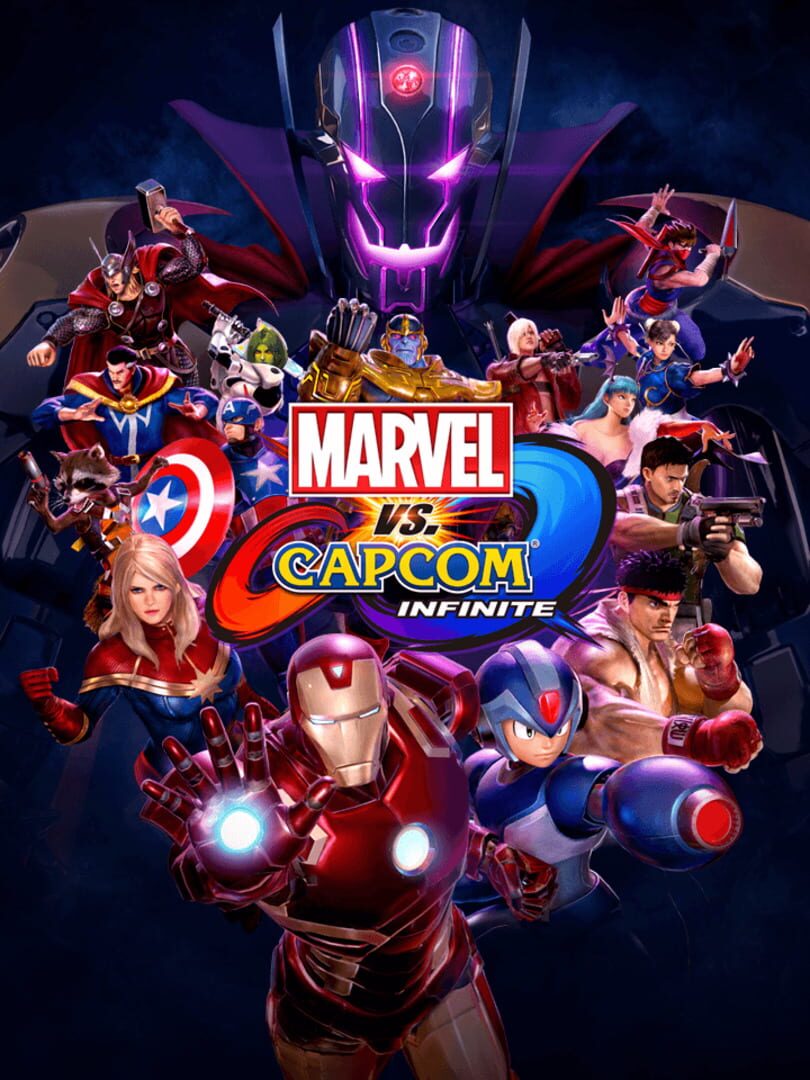
Introduction and Game Context
Released in September 2017, Marvel vs. Capcom: Infinite (MvCI) represents the sixth major installment in Capcom's legendary crossover fighting game series. Following the massive success of Ultimate Marvel vs. Capcom 3, expectations were sky-high. Infinite attempted to revitalize the franchise by introducing streamlined mechanics, a cinematic story mode, and the iconic power of the Infinity Stones.
Developer and Release Platforms
The game was developed and published by Capcom, working alongside Marvel Entertainment. Designed using Epic Games' Unreal Engine 4, the title aimed for a global multi-platform release.
Playable Platforms:
- PlayStation 4
- Xbox One
- Microsoft Windows (PC)
Story and Narrative: Worlds Collide
For the first time in the franchise, Capcom introduced a dedicated cinematic Story Mode. The narrative centers on the merging of the Marvel and Capcom universes into a single reality, caused by an alliance between Marvel's villain Ultron and Mega Man X's antagonist Sigma, forming the merged tyrant known as 'Ultron Sigma'.
To defeat this formidable mechanized threat, heroes and villains from both dimensions—including Iron Man, Captain America, Chun-Li, Dante, Thor, and Ryu—must unite. Their quest involves gathering the six Infinity Stones to shatter Ultron Sigma's hold over the universe. While the story offers fun fan-service moments and dynamic interactions between unlikely allies, the narrative execution occasionally feels formulaic.
Graphics and Visual Presentation
Visual presentation was one of the most controversial aspects of Marvel vs. Capcom: Infinite prior to and upon launch. Moving away from the vibrant, comic-book cel-shaded aesthetics of Marvel vs. Capcom 3, Capcom opted for a realistic cinematic style using Unreal Engine 4.
While stage environments and special attack effects look colorful and fluid, character models received criticism. Facial animations and character proportions—particularly for legacy figures like Chun-Li and Captain America—felt unpolished at release, although post-launch patches addressed some of these concerns.
Gameplay Mechanics: 2v2 Tag and Infinity Stones
Despite visual shortcomings, the core gameplay mechanics are where Marvel vs. Capcom: Infinite truly shines. Capcom shifted from the traditional 3v3 combat system back to a dynamic 2v2 tag-team system, eliminating traditional character assists in favor of an unrestricted 'Active Switch' mechanic.
Key gameplay mechanics include:
- Active Switch: Allows players to swap between their two chosen fighters instantly at any moment, even mid-combo or during special attacks.
- Infinity Stone System: Players select one of six Infinity Stones (Power, Time, Reality, Soul, Mind, Space) before the match. Each stone offers an Infinity Surge (a unique special move) and an Infinity Storm (a game-changing super mode).
Final Recommendation and Verdict
Marvel vs. Capcom: Infinite is a game of sharp contrasts. On one hand, its visual presentation and initial roster selection fall slightly short of the series' historical aesthetic standards. On the other hand, its core fighting mechanics, combo creativity, and the Infinity Stone system offer some of the most fluid and satisfying tag-team gameplay in modern fighting games.
Verdict: 7.5/10. Recommended for fighting game enthusiasts and competitive players who prioritize deep, expressive combat mechanics over pristine graphical polish.

