Context and Overview
Released in June 2021, Scarlet Nexus emerged as one of the most stylish and unique original intellectual properties of recent years. Termed by the developers as a "Brainpunk" action role-playing game, it blends futuristic cyber-dystopian aesthetics with supernatural telekinetic combat. Set in an alternate reality where human brains have evolved to unlock extra-sensory powers, humanity faces extermination from grotesque, brain-eating mutants known simply as the "Others." To counter this existential threat, the Other Suppression Force (OSF) recruits elite individuals possessing powerful psycho-kinetic abilities.
Developer and Background
Scarlet Nexus was developed by Bandai Namco Studios in collaboration with TOSE, and published worldwide by Bandai Namco Entertainment. The project was helmed by industry veterans, including director Kenji Anabuki and producer Keita Iizuka, both known for their extensive work on the acclaimed Tales of series (such as Tales of Vesperia). Their expertise in crafting rich narrative structures and dynamic combat systems shines brightly throughout Scarlet Nexus, bridging traditional JRPG storytelling with contemporary fast-paced action mechanics.
Playable Platforms
Scarlet Nexus is widely accessible across multiple console generations and PC. Players can experience the game on the following platforms:
- PC (Steam)
- PlayStation 4 and PlayStation 5
- Xbox One and Xbox Series X/S
The current-generation versions (PS5, Xbox Series X/S, and high-end PCs) deliver targeted 60 FPS performance at 4K resolution, offering fluid combat animations and rapid loading times.
Story and Narrative: A Dual Perspective
The narrative of Scarlet Nexus is delivered through two distinct campaigns starring dual protagonists: Yuito Sumeragi, an energetic recruit from a prominent political family, and Kasane Randall, an exceptionally talented yet emotionally detached OSF soldier. While their paths cross frequently, each campaign offers entirely unique story beats, companion interactions, and unraveling mysteries surrounding the origin of the Others, government conspiracies, and time manipulation.
The storytelling relies heavily on visual novel-style cutscenes combined with rendered 3D cinematic moments. While the visual novel presentation may feel static to some, the complex lore, political intrigue, and deep companion bonding episodes (similar to Persona's social links) keep the player thoroughly engaged across both play-throughs.
Graphics and Art Direction
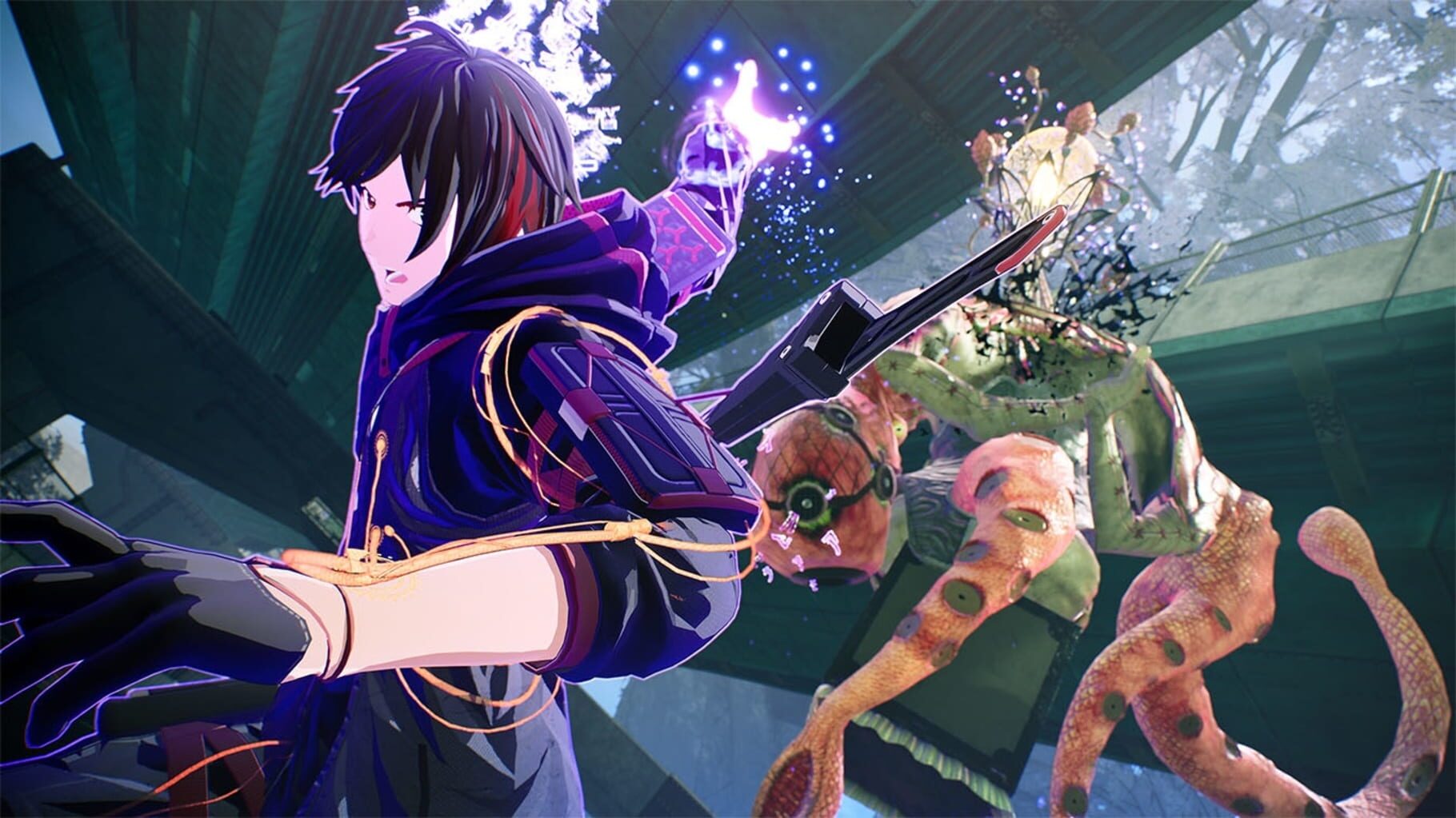
Visually, Scarlet Nexus excels through its striking anime-inspired aesthetics and hyper-stylized UI elements. The cell-shaded character models seamlessly blend with the futuristic, holographic cityscape of New Himuka. The designs of the primary enemies—the Others—are terrifyingly creative, fusing biological monster shapes with everyday inanimate objects like flower pots, light bulbs, and chandeliers.
Special visual effects shine during battle sequence visualizers, where telekinetic objects shatter realistically, and bright psycho-kinetic particle streams light up the screen without distracting from key action queues.
Gameplay and SAS Combat System
Combat is arguably the strongest pillar of Scarlet Nexus. Players combine traditional light and heavy melee attacks with telekinetic power, hurling cars, boulders, and industrial machinery at enemies. The core system revolves around the Struggling Arms System (SAS), which allows the player to temporarily borrow powers from party members—including pyrokinesis, invisibility, teleportation, sclerosis, and hyper-velocity.
Chaining these powers together creates deeply satisfying, combo-heavy combat encounters that require tactical awareness rather than simple button mashing.
Final Recommendation
Scarlet Nexus (2021) is a standout title that successfully delivers an innovative combat system wrapped inside an intriguing sci-fi universe. Its dual-protagonist structure provides exceptional replay value, effectively offering two games in one package.
| Pros | Cons |
|---|---|
| Dynamic telekinetic combat & SAS mechanics | Story cutscenes rely heavily on static panels |
| Extremely unique art style and enemy designs | Environment design can feel repetitive later in the game |
| Great soundtrack and high replayability | Pacing slows down during bonding episodes |
Verdict: 8.5/10 — Highly recommended for fans of action RPGs, anime aesthetics, and fast-paced combat systems like Astral Chain or Devil May Cry.