


The Dawn of a New Era in Virtual Reality
For years, Virtual Reality was a luxury reserved for hardcore PC enthusiasts with deep pockets and high tolerance for cable clutter. Early headsets required complex external tracking sensors mounted on walls and powerful graphics cards just to render basic virtual environments. Everything changed when Meta (then Oculus) introduced a revolutionary concept: wireless, fully self-contained standalone VR.
From Tethered Hardware to Standalone Freedom
When the modern revival of VR began, PC-tethered setups severely limited mainstream adoption due to technical complexity and high costs. While early mobile VR shells offered a glimpse of media consumption, they lacked full positional tracking. The true turning point came in May 2019 with the launch of the original Oculus Quest. By combining inside-out tracking, dual motion controllers, and onboard mobile processing power, the Quest delivered room-scale VR without requiring a single cable connected to a PC.
The Mass Market Breakthrough: Meta Quest 2
While the original Quest proved the concept, the Quest 2 (originally released as Oculus Quest 2) exploded into the mainstream in late 2020. Offering a higher resolution display, a smoother refresh rate, and an exceptionally accessible price point, the Quest 2 became an overwhelming commercial success. Millions of players entered virtual worlds for the first time, establishing Meta as the undisputed market leader in consumer VR hardware.
Landmark Games That Defined the Platform
Hardware alone cannot build a thriving platform; compelling software is essential. Several landmark system-sellers helped define the Meta Quest ecosystem and demonstrated the power of wireless immersion:

Beat Saber
Beat Saber remains the gold standard of VR rhythm gaming. Slicing directional blocks to energetic soundtracks using dual laser blades delivered an instantly intuitive, highly addictive arcade experience that perfectly demonstrated the freedom of wireless motion tracking.
Resident Evil 4 VR
Remaking a beloved survival horror classic specifically for VR was an ambitious project that paid off enormously. Resident Evil 4 VR allowed players to physically reach for weapons on their belt, reload firearms manually, and experience Leon S. Kennedy's iconic nightmare from an immersive first-person perspective.

The Walking Dead: Saints & Sinners
This dark, physics-based survival game set a new standard for gameplay depth on mobile hardware. Combining visceral melee combat, resource scavenging, and meaningful narrative choices, The Walking Dead: Saints & Sinners proved that standalone VR could support full-length, hardcore gaming experiences.
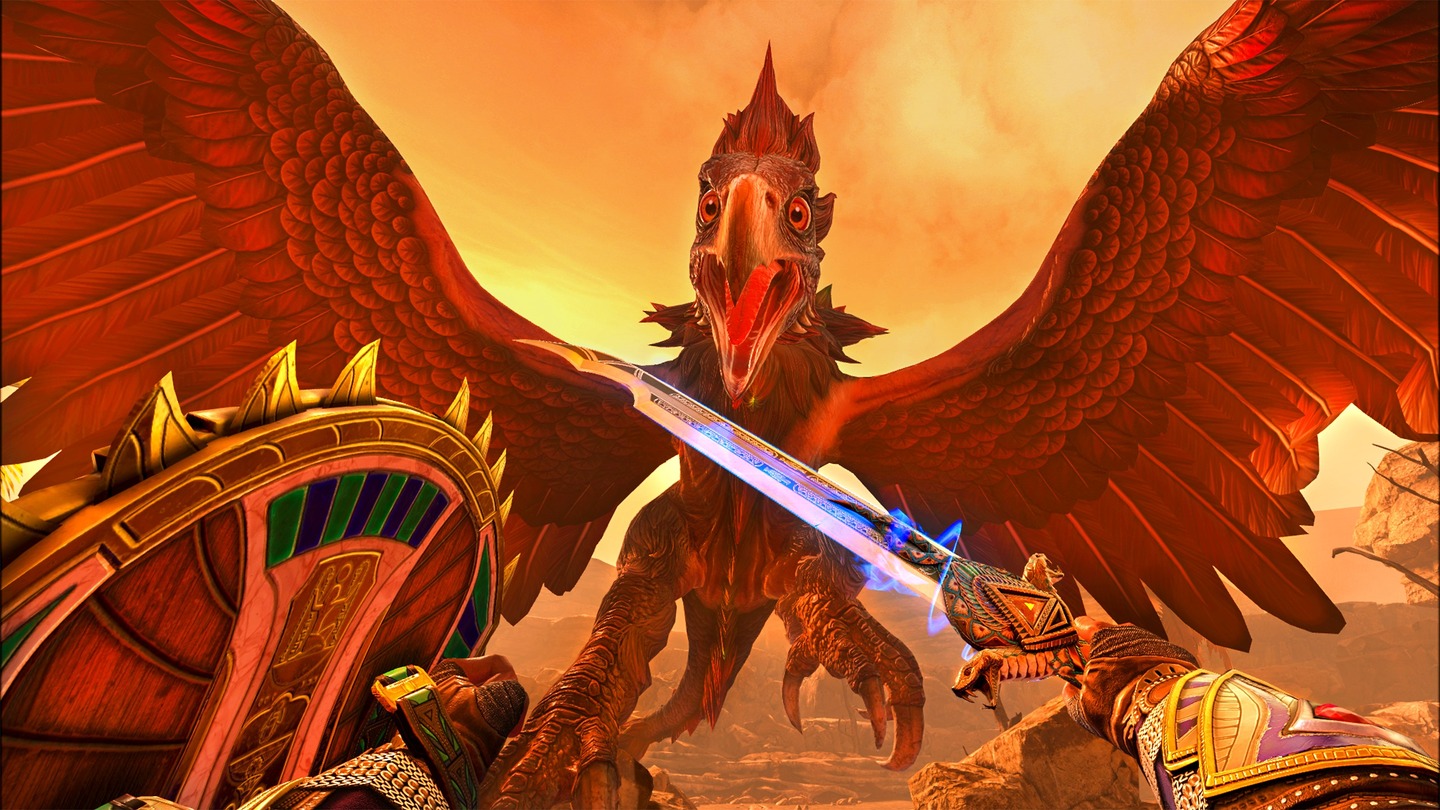
Asgard's Wrath 2
As one of the most expansive titles ever created for mobile VR, Asgard's Wrath 2 pushed the boundaries of what mobile chipsets could achieve. With dozens of hours of action-RPG exploration, god-scale combat, and detailed dungeons, it rivaled traditional big-budget console releases.
Meta Quest 3 and the Shift to Mixed Reality
With the launch of Meta Quest 3, the platform evolved beyond virtual reality into full-color Mixed Reality (MR). Powered by pancake lenses and a vastly upgraded processing unit, Quest 3 seamlessly blends digital objects into physical living spaces. This technological leap opens up brand-new game mechanics, allowing virtual enemies to break through real walls or tabletop strategy games to be projected onto actual dining tables.
Why Meta Quest Outpaced the Competition
Several strategic factors contributed to Meta's dominant position in the virtual reality market:
- Zero Friction Setup: Eliminating external lighthouse trackers, cables, and expensive PC requirements made VR accessible to casual gamers.
- Competitive Hardware Pricing: Aggressive hardware pricing allowed Meta to reach mass-market adoption faster than tethered competitors.
- Hybrid Connectivity: Features like Air Link allowed enthusiasts to connect their Quest to a gaming PC wirelessly, unlocking demanding PCVR titles like Half-Life: Alyx.
- Substantial Software Investment: Direct funding for internal and third-party development studios guaranteed a steady library of exclusive titles.
Frequently Asked Questions
Do I need a high-end PC to play Meta Quest games?
No. Meta Quest headsets are standalone systems equipped with built-in mobile processors, onboard storage, and internal batteries. You can play games directly on the device, though connecting to a gaming PC for high-end PCVR is available as an optional feature.
Can I still play Meta Quest 2 games on Meta Quest 3?
Yes, the Meta Quest ecosystem features backward compatibility. Games purchased for Quest 2 remain playable on Quest 3, often benefiting from improved frame rates and shorter loading times.
How long does the battery last during gameplay?
Most standalone Meta Quest headsets provide between two to two-and-a-half hours of active gameplay on a full charge. Battery life can be extended using external headstraps with integrated power packs.
Final Thoughts
The rise of Meta Quest represents one of the most significant evolutions in modern interactive media. By prioritizing convenience, wireless freedom, and continuous content investment, Meta transformed virtual reality from an expensive tech demo into a flourishing mainstream platform. As mixed reality technology continues to mature, the Quest hardware ecosystem remains at the forefront of immersive gaming.
