


Introduction to the Universe of Tamriel
The narrative universe created by Bethesda Game Studios for The Elder Scrolls is one of the most rich, expansive, and complex mythologies in video game history. Spanning thousands of years of recorded lore, mystical creation myths, divine conflicts, and political intrigue, understanding the full storyline can feel like studying real-world history.
At the center of this universe is the planet Nirn, specifically the continent of Tamriel. Tamriel is home to diverse races including humans (Nords, Imperials, Redguards, Bretons), elves or Mer (Altmer, Dunmer, Bosmer, Orsimer), and beastfolk (Khajiit, Argonians). Overarching all historical events are the mysterious artifacts known as the Elder Scrolls—divine relics that exist outside of normal time and space, foretelling past, present, and future events.
The Creation Myth: Anu, Padomay, and the Aurbis
Before time existed, there were two primordial forces: Anu (Stasis, Light, Order) and Padomay (Change, Darkness, Chaos). The interplay between these two forces brought forth the universe, known as the Aurbis. From Anu and Padomay arose the first immortal spirits, the Et'Ada (Original Spirits).
The Creation of Nirn and Lorkhan's Trick
One of these spirits, Lorkhan (the Trickster God), conceived a plan to create a mortal realm. He convinced or coerced many of the Et'Ada to aid him in creating Nirn. However, constructing the mortal plane required a immense sacrifice of divine power.
- The Aedra ("Our Ancestors"): Spirits who gave up a significant portion of their power to build Nirn. Eight of the strongest became the primary pantheon (the Eight Divines, later Nine with Talos). Because they gave up their power, they became bound to the mortal plane and bound by the laws of nature.
- The Daedra ("Not Our Ancestors"): Spirits who refused to participate or give up their energy. They retained their full godlike power and created their own realms within the void of Oblivion. Key Daedric Princes include Molag Bal, Mehrunes Dagon, Azura, and Sheogorath.
- The Magna Ge: Spirits who abandoned the creation project halfway through. Led by the chief architect Magnus, they tore through the fabric of the universe into the heavens (Aetherius). The massive tear left by Magnus became the sun, while smaller tears made by his followers became the stars, which allow magic to flow into Nirn.
When the remaining Aedra realized Lorkhan had robbed them of their immortality, they held a divine trial at the Adamantine Tower. As punishment, Lorkhan's heart was ripped out and launched into the ocean, forming a volcano known as Red Mountain on the continent of Tamriel.
The Timeline of Tamriel: A Breakdown of the Eras
History in The Elder Scrolls is divided into distinct historical epochs known as Eras. Understanding these eras is crucial to seeing how each game fits into the grand timeline.
The Dawn Era and Merethic Era
The Dawn Era represents prehistory when time was non-linear. It ended with the creation of Red Mountain and the stabilization of linear time. The Merethic Era followed, defined by early elven (Mer) dominance. Elves settled Tamriel, establishing powerful kingdoms such as the Aldmer in Summerset Isles and the Ayleids in Cyrodiil. Human ancestors (Nords) arrived from the northern continent of Atmora, led by Ysgramor, initiating centuries of bloody wars between humans and elves.
The First Era (1E)
The First Era lasted nearly 3,000 years and saw dramatic shifts in regional power:
- The Alessian Slave Rebellion: Human slaves in Cyrodiil, led by St. Alessia, overthrew their cruel Ayleid elven masters and founded the First Empire of Man.
- The Battle of Red Mountain: The ancient Dwemer (Deep Elves) discovered the Heart of Lorkhan beneath Red Mountain. Attempting to build a synthetic god (Numidium), they triggered a cataclysm that resulted in the entire Dwemer race vanishing instantaneously from Nirn.
- The First Dragon Break: Temporal anomalies occurred where linear time broke down, causing conflicting historical events to happen simultaneously.
The Second Era (2E)
Known as an era of chaos and interregnum, the Second Era lacked a central ruling authority in Cyrodiil for centuries. Major events during this time include the Planemeld—an invasion attempted by the Daedric Prince Molag Bal to merge Nirn with his Oblivion realm—and the ultimate rise of Tiber Septim. Tiber Septim conquered all of Tamriel using the reactivated Numidium, founding the Third Empire and ascending to godhood as Talos, initiating the Ninth Divine.
The Third Era (3E)
The Third Era encompasses the complete rule of the Septim Dynasty over a unified Tamriel. This era serves as the setting for the first four main entry games in the franchise and ends with the extinction of the Septim bloodline during the Oblivion Crisis.
The Fourth Era (4E)
The current period in the lore, marked by the decline of the Empire. Without a Septim emperor, regions seceded, the high elven Thalmor faction established the Third Aldmeri Dominion, and a devastating conflict called the Great War broke out. The Empire was forced to sign the humiliating White-Gold Concordat, outlawing the worship of Talos and sowing deep discord across Tamriel, particularly in Skyrim.
Main Games Narrative Breakdown
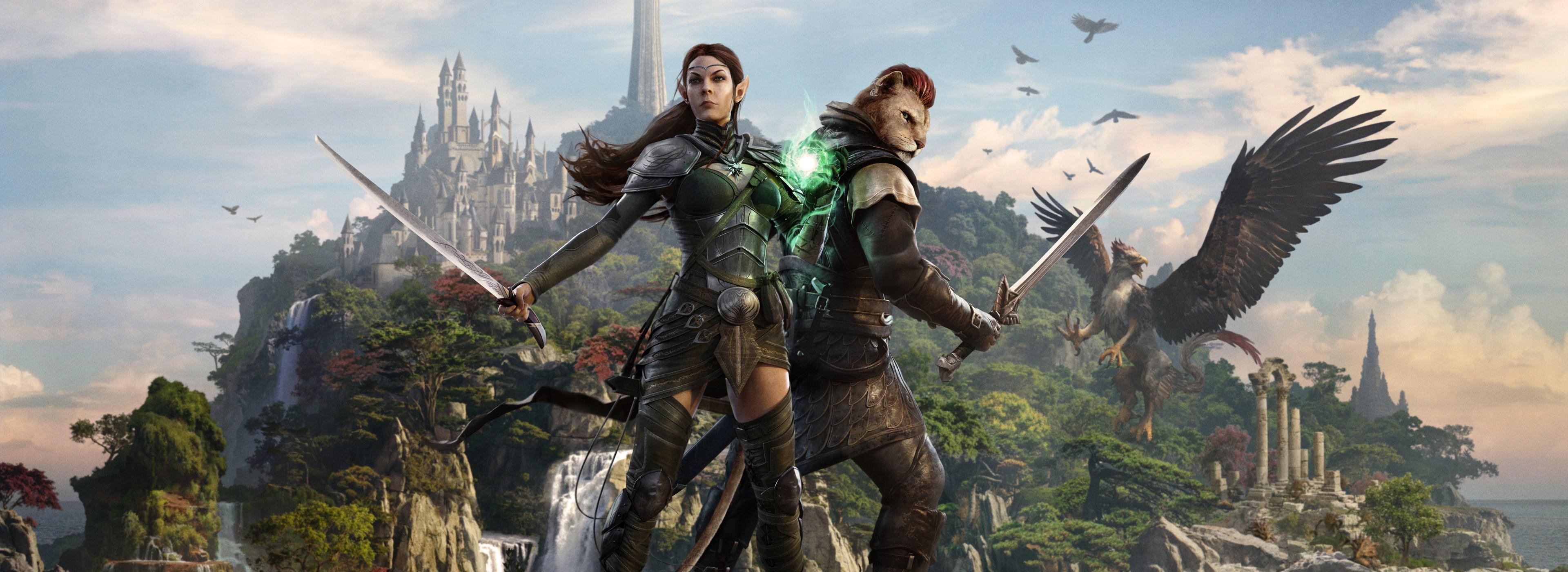
The Elder Scrolls Online
Chronologically the earliest game in the franchise, The Elder Scrolls Online takes place in the middle of the Second Era (2E 582). Tamriel is engulfed in the Three Banners War, a conflict where three alliances fight for control of the Imperial Throne in Cyrodiil. Taking advantage of the chaos, the Daedric Prince Molag Bal launches the Planemeld, dropping massive Dark Anchors to pull Nirn into his realm, Coldharbour. Players assume the role of the Vestige, a soul-shriven hero who ultimately thwarts Molag Bal's cosmic plot.

The Elder Scrolls: Arena
Taking place late in the Third Era (3E 389–399), The Elder Scrolls: Arena introduces the imperial struggle. The Imperial Battlemage Jagar Tharn betrays Emperor Uriel Septim VII, trapping him in a pocket dimension in Oblivion and magically disguising himself as the ruler. The protagonist, known as the Eternal Champion, travels across the provinces of Tamriel to recover the eight pieces of the shattered Staff of Chaos, eventually defeating Tharn and restoring Uriel Septim VII to the throne.

The Elder Scrolls II: Daggerfall
Set in 3E 405 in the Iliac Bay region, The Elder Scrolls II: Daggerfall follows an agent sent by Emperor Uriel Septim VII to free the ghost of King Lysandus and retrieve a letter. The quest quickly escalates into a political struggle for the control of the Mantella, the power source required to activate the ancient brass golem, Numidium. The ending triggered a major lore phenomenon known as the Warp in the West—a Dragon Break where all six possible political endings occurred simultaneously without destroying the timeline.

The Elder Scrolls III: Morrowind
Taking place in 3E 427 on the island of Vvardenfell, The Elder Scrolls III: Morrowind centers on the reincarnation of the ancient Chimer hero Indoril Nerevar. The player character, the Nerevarine, is sent by Uriel Septim VII to fulfill local prophecies. The Nerevarine must confront Dagoth Ur, an ancient fallen hero who has tapped into the Heart of Lorkhan to construct a giant god called Akulakhan and spread a corruptive plague across Tamriel. By severing Dagoth Ur's connection to the Heart of Lorkhan using ancient tonal tools, the Nerevarine saves Tamriel, though this removes the source of power for the Tribunal gods, leading to their ultimate downfall.
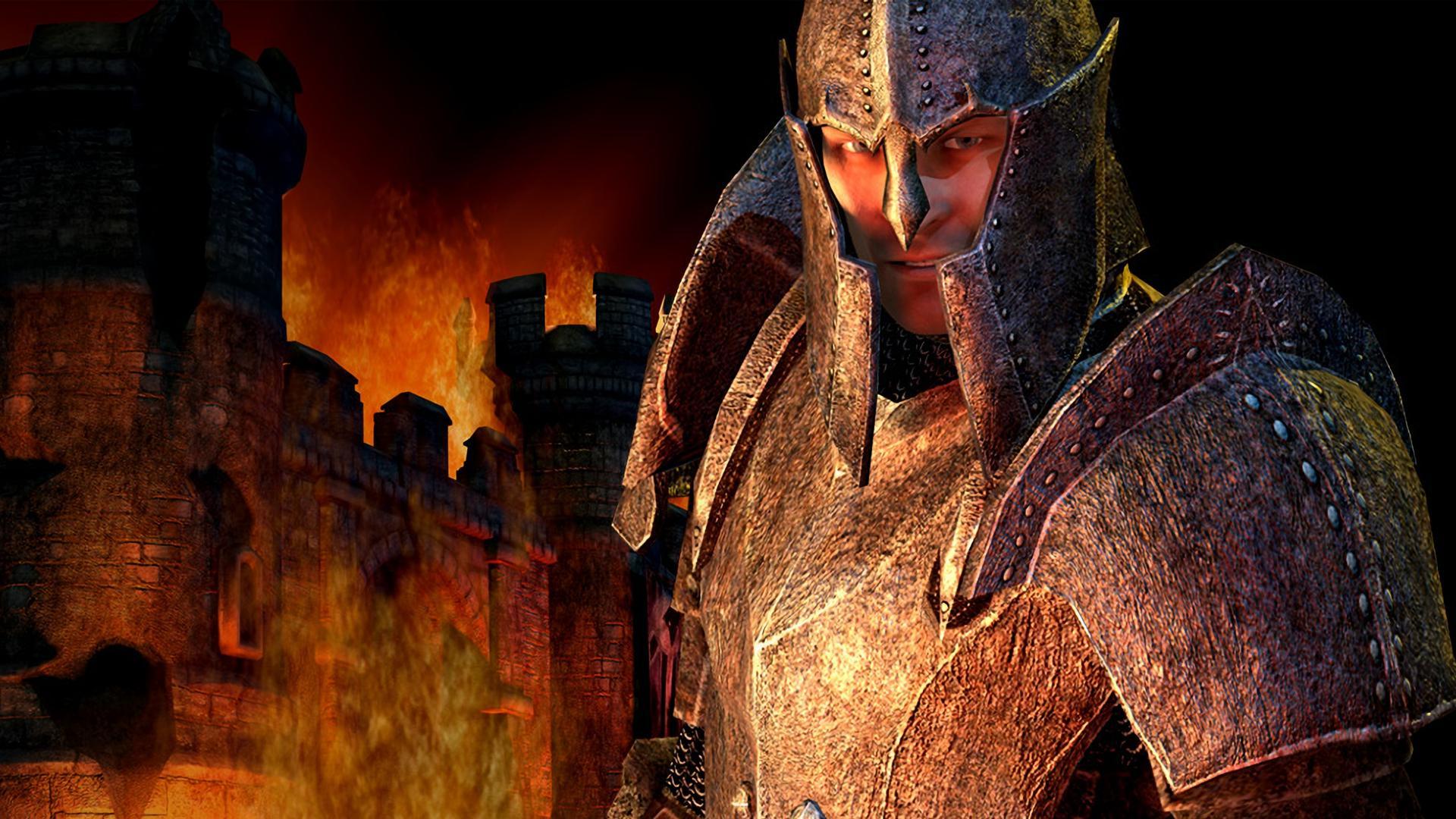
The Elder Scrolls IV: Oblivion
Occurring in 3E 433, The Elder Scrolls IV: Oblivion follows the catastrophic events known as the Oblivion Crisis. Emperor Uriel Septim VII is assassinated by a Daedric cult called the Mythic Dawn, led by Mankar Camoran. Without an heir of dragon blood wearing the Amulet of Kings, the barriers separating Nirn from Oblivion collapse, allowing the Daedric Prince Mehrunes Dagon to launch a full-scale invasion of Cyrodiil. The player works alongside the Emperor's secret illegitimate son, Martin Septim. In a dramatic climax in Imperial City, Martin sacrifices his life and the Amulet of Kings to transform into an avatar of Akatosh, banishing Mehrunes Dagon permanently and closing the Oblivion gates forever, bringing an end to the Third Era.
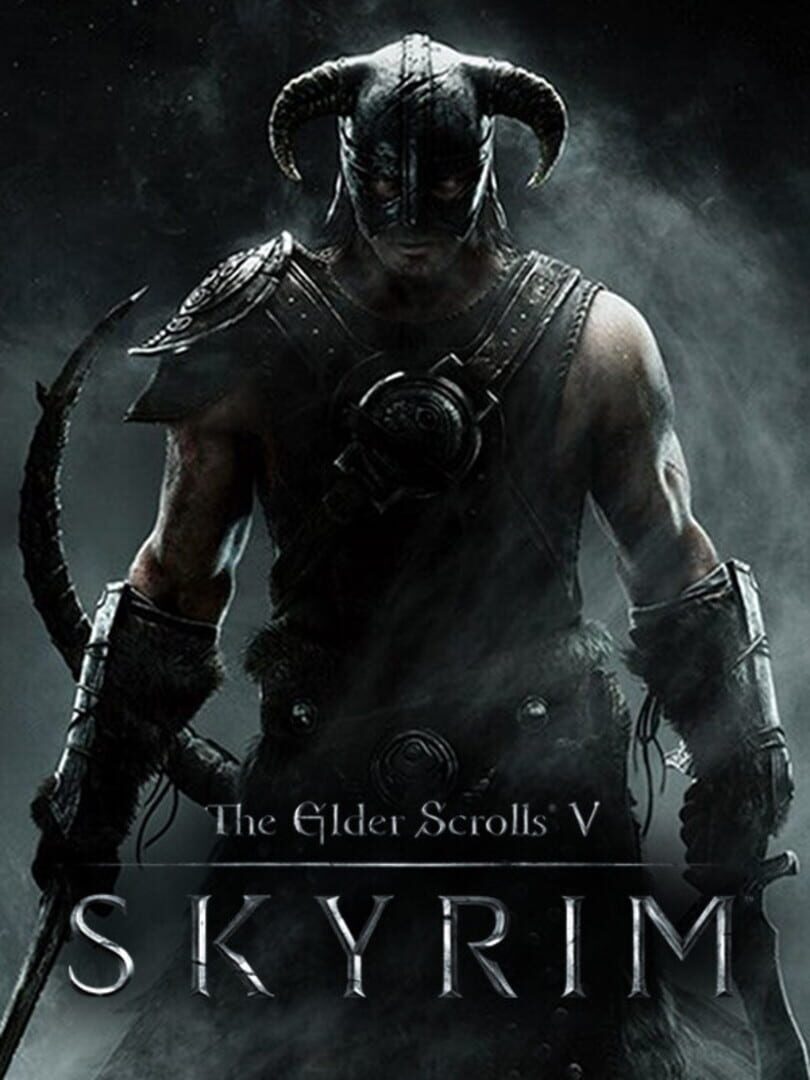
The Elder Scrolls V: Skyrim
Set 200 years later in 4E 201, The Elder Scrolls V: Skyrim takes place during a brutal civil war between the Imperial Legion and the Nord Stormcloak rebels, triggered by the ban on Talos worship. The conflict satisfies an ancient prophecy, signaling the return of Alduin the World-Eater, a powerful dragon destined to destroy Nirn.
The player character is revealed to be the Last Dragonborn (Dovahkiin), a mortal gifted with the soul and voice of a dragon. Guided by the Greybeards and the surviving Blades, the Dragonborn unlocks ancient Shouts (Th'um) and travels to the Nordic afterlife of Sovngarde to defeat Alduin, delaying the end of the world.
Frequently Asked Questions
What is the main theme of The Elder Scrolls story?
At its core, The Elder Scrolls explores the themes of prophecy, divine agency versus mortal free will, cycle of empire and collapse, and the fluid nature of historical truth (often referred to by lore enthusiasts as unreliability of the narrator).
What is the difference between Aedra and Daedra?
The primary distinction comes down to creation and sacrifice. Aedra sacrificed their divine power to help create the physical world (Nirn) and are tied to concepts of order and mortal life. Daedra refused to sacrifice their power, remaining fully immortal inside their home realms of Oblivion, frequently interfering in mortal affairs for personal amusement, power, or chaotic goals.
What is a Dragon Break in Tamriel lore?
A Dragon Break is a temporal phenomenon where linear time breaks down completely, usually caused by immense divine intervention or the manipulation of reality (such as activating the Numidium). During a Dragon Break, multiple contradictory timelines occur at once. Once time re-aligns, all conflicting events become true simultaneously in history.
Are all The Elder Scrolls games connected?
Yes, every main game in The Elder Scrolls shares a continuous history on the continent of Tamriel. While each title focuses on a self-contained story set in a different region or timeframe with a new protagonist, the actions of previous heroes directly shape the political landscape, religion, and geography of subsequent games.
Final Thoughts
The universe of The Elder Scrolls is a masterclass in world-building. From the divine cosmic warfare between Anu and Padomay to the grounded political factionalism seen in The Elder Scrolls V: Skyrim, the lore offers an endless depth of mystery. As fans look forward to future entries in the franchise, the foundational stories established across Tamriel's long eras remain among the most fascinating narratives in modern gaming.
