


Capcom's legendary franchise spans thousands of years of fictional history, split across multiple distinct series and alternate universe timelines. What began as a simple story about a heroic blue robot fighting evil scientists evolved into an epic science-fiction narrative dealing with artificial intelligence, existential rights, post-apocalyptic survival, and the evolution of humanity.
Understanding how the various series fit together can be confusing for both newcomers and longtime fans. The overarching continuity is primarily divided into two main timelines: the Robotics Timeline (the primary main continuity) and the Network Timeline (an alternate reality). Below is the complete guide to the chronological progression of the world of Mega Man.
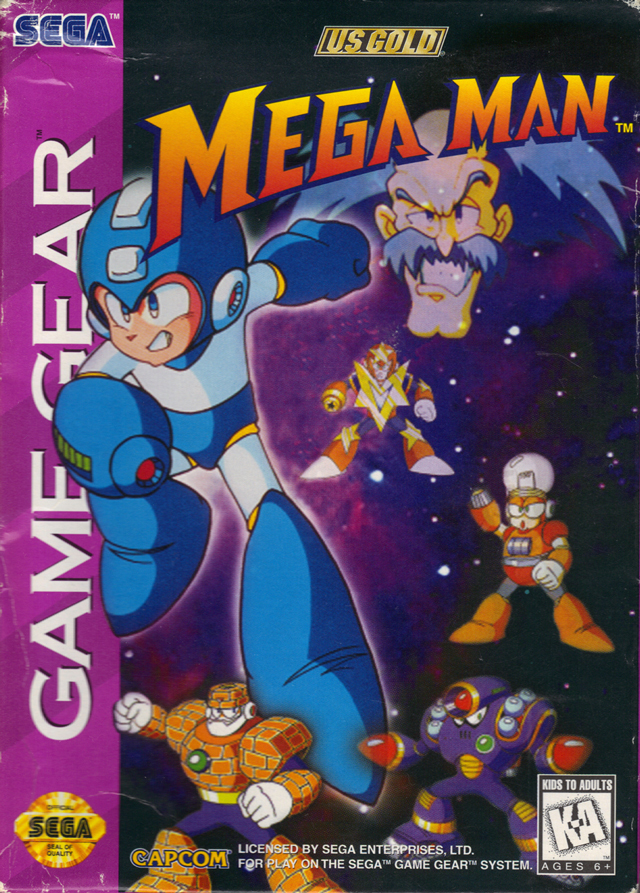
1. The Classic Era (20XX): The Dawn of Advanced Robotics
The main narrative begins in the early 21st century, an era known simply as 20XX. Robotics pioneers Dr. Thomas Light and Dr. Albert Wily collaborate to build human-like robots designed to assist society. Their partnership breaks down when Dr. Wily grows resentful of Dr. Light receiving sole recognition for their achievements.
Dr. Wily reprogrammed Dr. Light's industrial Robot Masters to take over the city. In response, Dr. Light converts his lab assistant robot, Rock, into a battle-ready hero known as Mega Man. Throughout games like Mega Man, Mega Man 2, Mega Man 3, and up to Mega Man 11, Mega Man continuously thwarts Dr. Wily's world-domination schemes alongside allies like Roll, Proto Man, and his rival Bass.
Despite the lighthearted tone of these early adventures, the seeds of future tragedy are sown here. Realizing his age and imminent demise, Dr. Wily begins work on an advanced robot powered by a dark virus—Zero—while Dr. Light works in secret on his ultimate creation: Mega Man X.

2. The X Era (21XX): Reploids and the Maverick Wars
Roughly one hundred years later, in the year 21XX, archaeologist Dr. Cain discovers the sealed capsule containing Mega Man X. X is the world's first free-thinking android with complete free will and human emotions. Impressed by Dr. Light's design, Dr. Cain reverse-engineers X's internal architecture to mass-produce advanced androids called Reploids.
Without Dr. Light's rigorous 30-year moral testing, several Reploids begin to malfunction or turn violent—a phenomenon designated as becoming a Maverick. To combat this threat, the Maverick Hunters organization is formed, initially led by the powerful Reploid Commander Sigma.
When Zero's capsule is uncovered, his latent Wily virus infects Sigma during a confrontation. Sigma turns Maverick, initiating a catastrophic global conflict documented across games such as Mega Man X, Mega Man X4, Mega Man X8, and Mega Man X: Command Mission. X and Zero fight side-by-side through endless devastating wars, laying the groundwork for severe environmental decay.

3. The Zero Era (22XX): The Aftermath of the Elf Wars
Following the end of the Maverick Wars, a brief era of research leads to the creation of the Mother Elf—a digital program capable of instantly neutralizing the Sigma Virus. However, a mad scientist named Dr. Weil corrupts the Mother Elf into the Dark Elf and initiates the horrific Elf Wars. This brutal four-year conflict eradicates 90% of all Reploids and 60% of human life.
To end the war, Zero sacrifices his original body to seal the Dark Elf, while X sacrifices his physical body to seal away evil forces, leaving his consciousness behind as a Cyber-Elf. Zero's body goes into deep hibernation, leading into the events of Mega Man Zero.
Awakening 100 years later with total amnesia, Zero is discovered by a human scientist named Ciel, who leads a Resistance group fighting against Neo Arcadia—a totalitarian human sanctuary ruled by Copy X. Across Mega Man Zero 2, Mega Man Zero 3, and Mega Man Zero 4, Zero defeats the tyrannical Dr. Weil at the cost of his own life, finally restoring balance to the world.
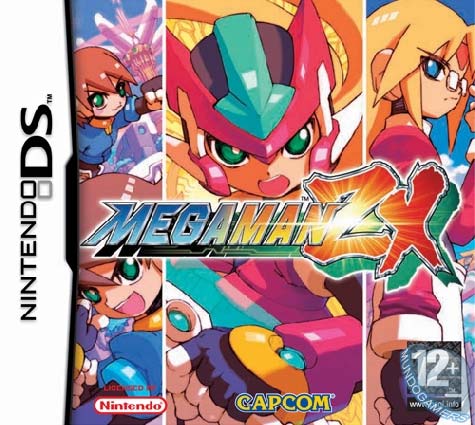
4. The ZX Era (25XX): The Fusion of Human and Machine
Two hundred years after Zero's ultimate sacrifice, humanity and Reploids live together in a reconstructed society. Human life spans are artificially modified with cybernetics, while Reploids are given fixed lifespans, blurring the line between human and machine completely.
Peace is shattered by Slither Inc. and the resurgence of mysterious bio-mechanical artifacts called Biometals—sentient live-metal devices containing the memories and powers of legendary heroes like X, Zero, Fefnir, and Harpuia. In Mega Man ZX and Mega Man ZX Advent, young protagonists Vent, Aile, Grey, and Ashe use these Biometals to protect the world from Model W, an evil remnant of Dr. Weil's fortress.
5. The Legends Era (8000s): A Distant, Post-Apocalyptic Future
Thousands of years after the events of the ZX series, catastrophic global flooding covers the entire Earth, wiping out natural human life entirely. The remaining inhabitants are artificial synthetic humans known as Carbons.
In this era, featured in The Misadventures of Tron Bonne, Mega Man Legends, and Mega Man Legends 2, explorers known as Diggers excavate ancient underground ruins searching for Quantum Refractors, the world's main energy source.
A young Digger named Mega Man Volnutt uncovers the true history of the planet: he is actually Mega Man Trigger, an ancient unit designed to maintain the System on a lunar colony. Despite the cheerful aesthetic, this far-future setting represents the distant logical end of the original timeline.

6. The Alternate Timeline: Network and Wave Eras
In an alternate 20XX branching path, Dr. Light's research into robotics loses funding in favor of Dr. Tadashi Hikari's digital networking research. Instead of physical robots, society advances around the internet, digital devices called PETs, and artificial intelligence programs called NetNavis.
- The Network Era (200X): Centered around LAN Hikari and his NetNavi in Mega Man Battle Network. Together, they stop cyber-terrorist organizations like WWW and Syndicate Gospel.
- The Star Force Era (22XX): Taking place 200 years after Battle Network, physical wires are replaced by electromagnetic waves. In Mega Man Star Force, a young boy named Geo Stelar merges with an alien wave-being named Omega-Xis to become Mega Man, defending Earth from extraterrestrial wave threats.
Chronological Order Summary Table
| Series | Timeline Era | Key Characters |
|---|---|---|
| Classic Series | 20XX | Mega Man, Dr. Light, Dr. Wily, Proto Man, Roll |
| X Series | 21XX | Mega Man X, Zero, Axl, Sigma, Dr. Cain |
| Zero Series | 22XX | Zero, Ciel, Copy X, Dr. Weil |
| ZX Series | 25XX | Vent, Aile, Grey, Ashe, Biometal Model X |
| Legends Series | 8000+ | Mega Man Volnutt, Roll Casket, Tron Bonne |
| Battle Network (Alt) | 200X | LAN Hikari, MegaMan.EXE |
| Star Force (Alt) | 22XX | Geo Stelar, Omega-Xis |
Frequently Asked Questions
Are all Mega Man games connected in one single timeline?
No. Most games belong to the main Robotics Timeline, which flows from Classic to X, Zero, ZX, and finally Legends. However, Mega Man Battle Network and Mega Man Star Force exist in a separate parallel universe focused on internet technology rather than physical robotics.
Is Mega Man X the same character as the original Mega Man?
No. Mega Man X is a completely separate, highly advanced robot built by Dr. Light before his death. While based on the original design, X possesses complete free will, complex emotional cognition, and vastly upgraded battle systems.
Why did the world flood in the Legends series?
Over thousands of years between the ZX era and the Legends era, rising sea levels and global cataclysms destroyed terrestrial landmasses. The artificial system flooded the world to manage the transition from true humans to synthetic Carbons.
Final Thoughts
The story of Capcom's iconic mascot is far deeper than classic side-scrolling action suggests. From the noble beginnings of 20XX to the flooded ruins of the distant 8000s, the Mega Man narrative stands as one of the most ambitious and expansive sci-fi sagas in video game history.
