Introduction & Context
Released in 1987 by Sega, Super Hang-On stands as one of the most iconic arcade motorcycle racing games of the 16-bit era. Building directly upon the groundbreaking success of its 1985 predecessor, Hang-On, this high-octane sequel pushed arcade hardware limits and refined bike control physics. In the late 1980s, Sega dominated arcades with its physical motion-controlled "Taikan" cabinets, and Super Hang-On was the pinnacle of that immersive design language, featuring a ride-on replica motorcycle that players tilted to steer through sharp turns.
Developer & Historical Significance
Super Hang-On was designed by the legendary game auteur Yu Suzuki and developed by Sega's premier AM2 team. Suzuki, who earned game history fame through titles like Out Run, After Burner, and Virtua Fighter, utilized Sega's advanced custom hardware to deliver an unprecedented sense of speed. Super Hang-On holds historical significance for showcasing how arcade games could transition from simple high-score chasers to deeper, feature-rich gaming experiences.
Story & Narrative: Arcade Speed vs. Console Career
While traditional arcade racing games lacked narrative depth, Super Hang-On offered a unique approach depending on where you played it:
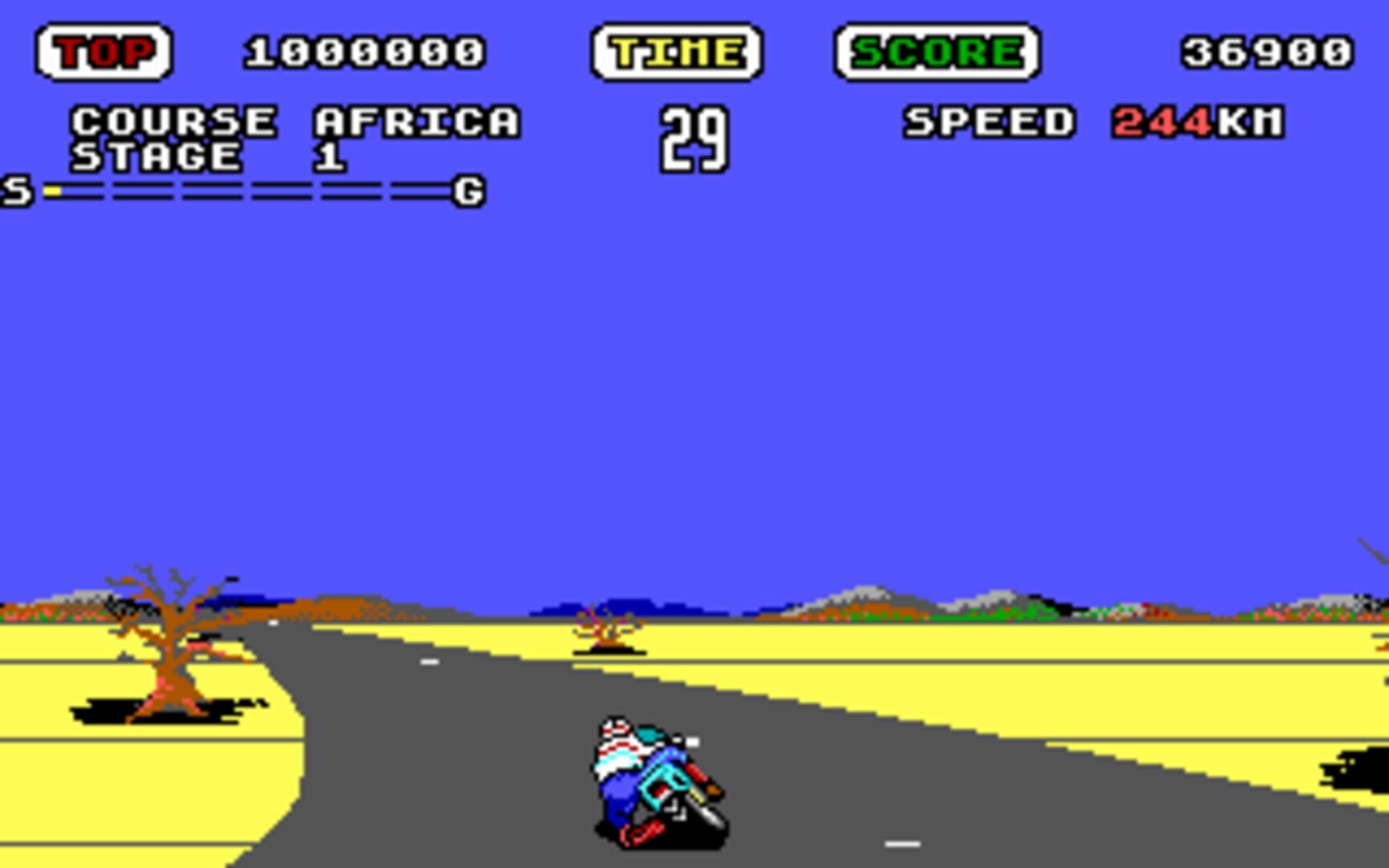
- Arcade Mode: Pure, high-stakes time-attack racing. Players choose from four global courses of varying difficulty—Africa (Beginner), Asia (Junior), America (Senior), and Europe (Expert)—racing against rival bikers and a ticking clock across dozens of grueling stages.
- Original Mode (Home Ports): The Sega Genesis/Mega Drive port introduced a story-driven Original Mode. In this mode, you control a rookie racer climbing the professional ranks. You hire and fire mechanics, manage contract sponsors, earn prize money, and purchase bike upgrades like better engines, frames, muffler systems, and tires to defeat specific rival racers across intense career seasons.
Graphics, Super Scaler Technology & Audio
Graphics in Super Hang-On were ahead of their time, driven by Sega's proprietary Super Scaler arcade hardware. The engine rendered dozens of road-side objects, dynamic horizon shifts, and steep hill climbs with exceptionally fast pseudo-3D sprite scaling. The frame rate remained silky smooth despite high speeds and dense sprite activity on screen.
The soundtrack, composed by Hiroshi Kawaguchi, Katsuhiro Hayashi, and Yasuhiro Takagi, remains legendary. Tracks like "Outride a Crisis" and "Sprinter" defined 80s arcade synth-rock audio design.
Playable Platforms
Over the decades, Super Hang-On has been ported across generations of hardware:
- Arcade: Original motion-cabinet and standard upright releases (1987).
- 16-Bit Consoles & Microcomputers: Sega Genesis/Mega Drive, Commodore Amiga, Atari ST.
- 8-Bit Home Systems: Commodore 64, ZX Spectrum, MSX, Amstrad CPC.
- Modern Consoles & Handhelds: Wii Virtual Console, PlayStation 3, Xbox 360, and Nintendo 3DS (as 3D Super Hang-On, featuring enhanced stereoscopic 3D graphics and tilt controls).
- In-Game Mini-Games: Fully playable within modern Sega games such as Yakuza 0, Yakuza 6: The Song of Life, and Fist of the North Star: Lost Paradise.
Game Summary & Technical Specifications
| Feature | Details |
|---|---|
| Developer / Publisher | Sega AM2 / Sega |
| Lead Designer | Yu Suzuki |
| Release Date | 1987 (Arcade) |
| Genre | Arcade Motorcycle Racing |
| Iconic Audio Tracks | "Outride a Crisis", "Sprinter", "Winning Run" |
Final Recommendation & Verdict
Super Hang-On (1987) is a timeless retro gaming masterclass. Its blend of lightning-fast gameplay, responsive handling, legendary synth-driven music, and innovative career features in console ports makes it a must-play for racing enthusiasts and retro gaming historians alike. Whether you play it on original arcade hardware, via modern retro compilations, or inside a Yakuza arcade room, it remains an unforgettable high-speed thrill ride.