Introduction and Context
During the late 2000s, the tower defense genre experienced a massive surge in popularity, transitioning from custom custom-map mods into fully realized standalone titles. Released in 2009, Sol Survivor emerged as one of the standout indie titles of this era. Developed during a time when developers were experimenting with mixing fast-paced action with deep strategic planning, Sol Survivor carved out its own niche by emphasizing off-field support mechanics alongside traditional turret placement.
Developer and Platform Availability
Sol Survivor was created by Frogshots Games, an independent development studio that aimed to deliver robust strategy experiences with high replayability. The game originally debuted on the Xbox 360 via the Xbox Live Indie Games (XBLIG) channel, where it quickly gained a loyal following. It later expanded to PC (Microsoft Windows) via Steam, where it enjoyed enhanced controls, graphic settings, and mouse-and-keyboard precision. Today, while it remains an older title, it can still be found and played on PC via digital storefronts.
Story and Narrative
The narrative in Sol Survivor is minimalist, serving primarily as a framework to propel players from one battleground to the next. Set in a gritty, militaristic sci-fi universe, human colonies across various distant worlds are under siege by aggressive alien hordes known as the Ascendancy. As an orbital commander, your duty is to protect vulnerable civilian structures, planetary cores, and supply lines. While there are no complex character arcs or dramatic plot twists, the voiceover briefings and tactical ambiance successfully establish a sense of urgency and military tension.
Graphics and Visual Presentation
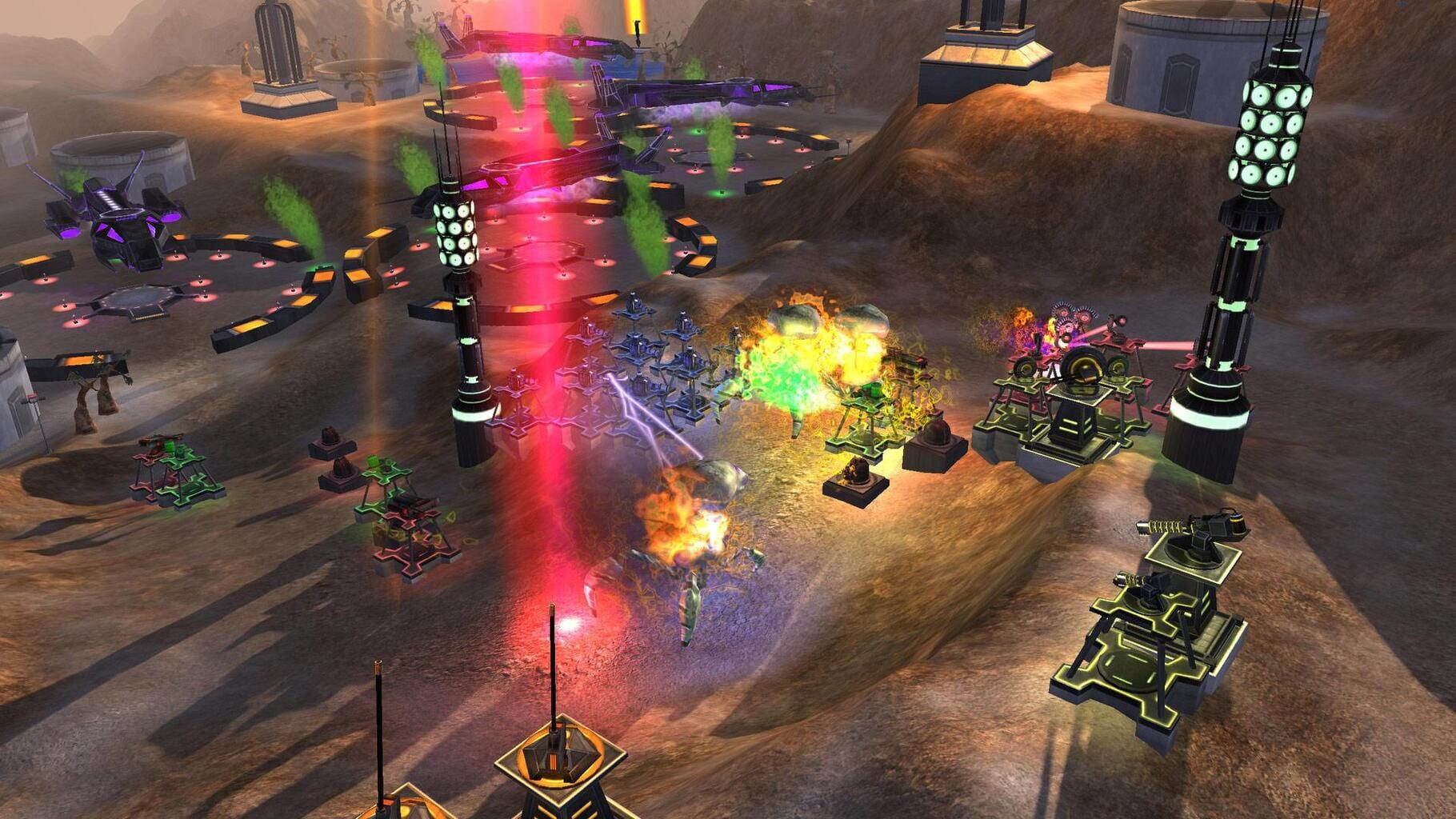
For a 2009 indie release, Sol Survivor held its ground visual-wise by adopting a full 3D engine instead of the 2D isometric perspectives common at the time. Players can zoom in close to the action or zoom out for a tactical overhead view. The environmental designs vary across desert planets, icy tundras, and volcanic wastes. While the character models and enemy textures show their age today, the visual effects—specifically orbital strikes, artillery bombardments, and laser blasts—still provide a satisfying impact during intense firefights.
Gameplay Dynamics and Unique Features
What set Sol Survivor apart from contemporary competitors like Defense Grid was its emphasis on executive support abilities. In addition to placing fixed turrets (such as machine guns, mortars, flame towers, and slow-fields), players select an active Executive commander equipped with unique orbital weapons. These allow players to launch direct strikes, call down repair drones, or buff existing turrets in real time. Combined with robust multiplayer co-op and versus modes, the gameplay offers a deep layer of tactical flexibility.
Final Recommendation
Sol Survivor (2009) remains a delightfully challenging slice of indie strategy history. Its combination of traditional tower defense logistics and active, real-time orbital support creates an engaging rhythm that keeps players on their toes. While its story is sparse and its graphics reflect its era, the solid gameplay mechanics and varied mode offerings make it well worth playing.
Verdict: 8/10 — Recommended for strategy fans, tower defense enthusiasts, and retro indie collectors looking for a rewarding tactical experience.