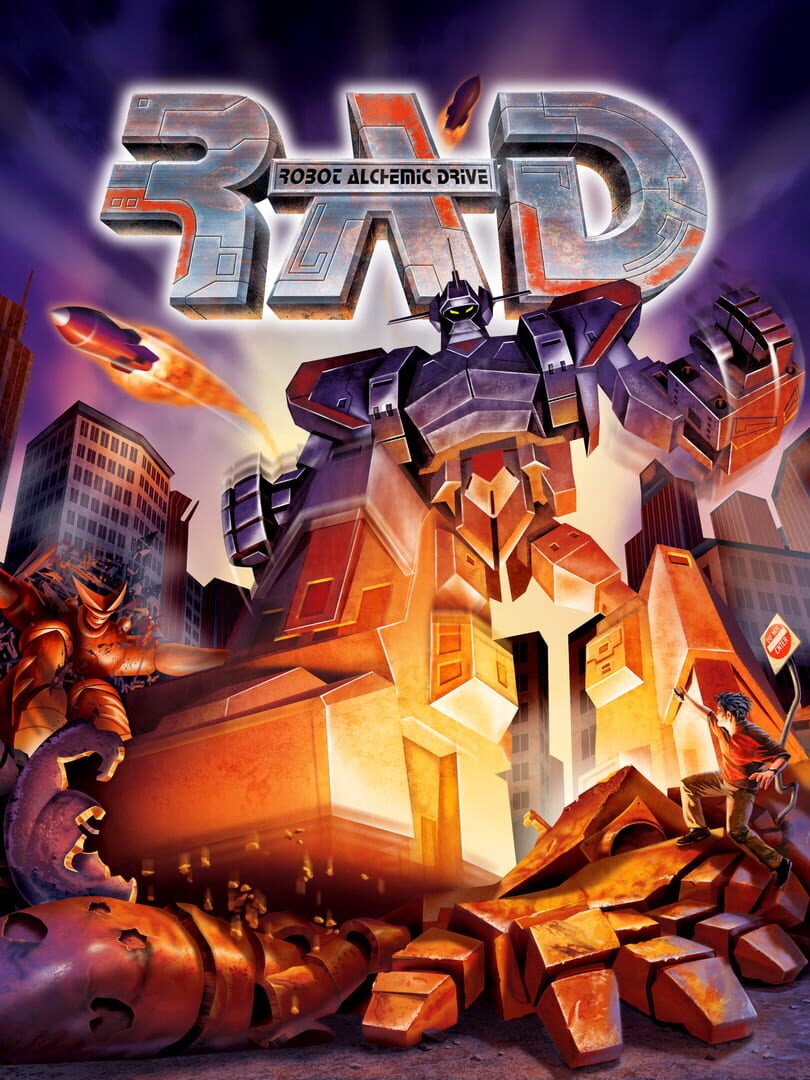
Released in 2002 for the PlayStation 2, Robot Alchemic Drive (commonly known as R.A.D.) remains one of the most innovative and uniquely ambitious giant robot games ever created. Instead of placing the player safely inside a cockpit or using a standard third-person follow-camera, Robot Alchemic Drive forces you to control a skyscraper-sized mecha from the perspective of a human standing on the ground with a remote control. This single design choice turns every battle into a thrilling exercise in spatial awareness, positioning, and epic urban destruction.
Game Context & History
During the early 2000s, giant robot games were largely dominated by fast-paced titles such as Armored Core and Zone of the Enders. Robot Alchemic Drive took a radically different path by prioritizing physical weight, massive scale, and environmental realism. Players must constantly maneuver their human character to rooftops, footbridges, or distant hills to maintain a clear line of sight to their robot, balancing the danger of getting crushed by falling debris with the need to accurately direct their machine in battle.
Developer Background
The game was developed by Sandlot and published by Enix (shortly before their merger into Square Enix). Sandlot has earned a legendary reputation for crafting giant monster and mecha titles, most famously creating the long-running Earth Defense Force (EDF) franchise and Gigantic Drive. Their signature style—fully destructible cityscapes paired with colossal, chaotic scale—is fully on display in Robot Alchemic Drive.
Story and Narrative
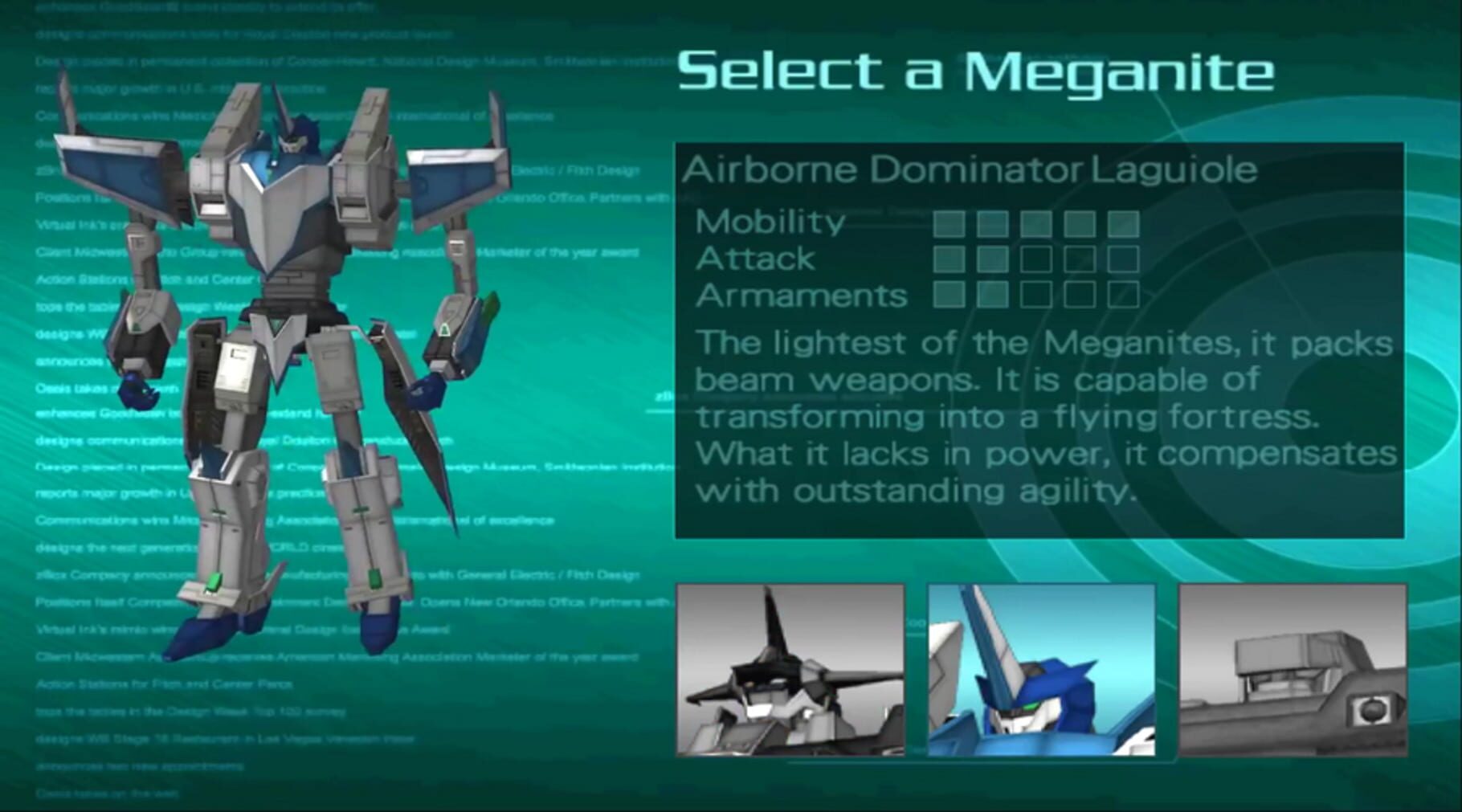
The plot revolves around an alien invasion by giant exo-atmospheric entities known as the Volcanic Heavenly Beings (VHG). To combat this extinction-level threat, the Tsukioka Corporation unveils massive alchemical mechs called Meganodes.
Players can choose one of three distinct protagonists—Naoto Tsukioka, Ellen Bridges, or Ryo Saki—each offering personal motivations, unique relationship arcs, and alternative narrative paths. While the English voice dubbing is famously campy and dramatic, it gives the game an undeniable retro B-movie charm. Furthermore, damage to the city directly impacts narrative outcomes, financial costs, and civilian reactions, giving genuine weight to your combat actions.
Graphics & Gameplay Mechanics
Visually, the game pushes the PlayStation 2 to its limit with fully destructible urban zones. While character models and ground textures reflect early 2000s hardware constraints, the sheer visual impact of collapsing skyscrapers and dynamic shadows creates an unmatched atmosphere.
The gameplay uses a dual-analog control scheme where each analog stick directly controls one of the robot's arms, requiring deliberate physical input to punch, block, and throw enemies. Combined with transformable mech modes and special weapon attacks, mastering the control system is immensely satisfying.
Playable Platforms
| Platform | Availability Status |
|---|---|
| PlayStation 2 | Original Physical Disc (NTSC-U / NTSC-J) |
| PlayStation 3 | Playable via Original Launch Backward-Compatible Models |
| PC (Emulation) | Playable via PCSX2 Emulator (Requires legally owned ISO dump) |
Final Recommendation & Verdict
blockquote>"Robot Alchemic Drive is a masterclass in scale and control immersion that modern mecha games have rarely managed to replicate."Verdict: 8.5/10 — Essential Cult Classic
For fans of mecha anime, unique retro control schemes, or gaming history, Robot Alchemic Drive is an absolute must-play. Despite minor camera challenges and cheesy voice work, its brilliant scale, destructible environments, and deep mechanics make it one of the absolute hidden gems of the PlayStation 2 era.