Context & Introduction
In 1999, arcade gaming was undergoing a massive shift towards fully interactive 3D environments. Amidst this evolution, Power Stone emerged as a breath of fresh air. Moving away from traditional 2D plane fighters like Street Fighter, Capcom crafted a dynamic, fast-paced 3D arena brawler that prioritized environmental interaction, movement, and chaotic fun over complex button inputs.
Developer & Release Background
Developed and published by Capcom, Power Stone was initially unleashed on the Sega NAOMI arcade system hardware before receiving its legendary home port on the Sega Dreamcast in 1999. Under the leadership of producer Hiroyuki Kobayashi, Capcom pushed the boundaries of multi-directional arena fights, setting a benchmark for future brawlers like Super Smash Bros. Melee and Shrek SuperSlam.
Story and Narrative
Set in an alternate, steampunk-inspired 19th-century world, the narrative follows various adventurers, fortune hunters, and warriors from around the globe. Each character seeks the legendary Power Stones—mystical gems said to grant any wish or impart unimaginable power upon their possessor.
- Fokker (Edward Falcon): A daring British pilot seeking adventure.
- Ryoma: A disciplined samurai searching for strength and enlightenment.
- Rouge: A fortune teller seeking the stones for mystical knowledge.
- Jack: A mysterious, knife-wielding fugitive driven by dark desires.
While the story is told primarily through brief arcade-style cutscenes and endings, it provides plenty of charm and personality to anchor the fast-paced action.
Graphics and Visual Style
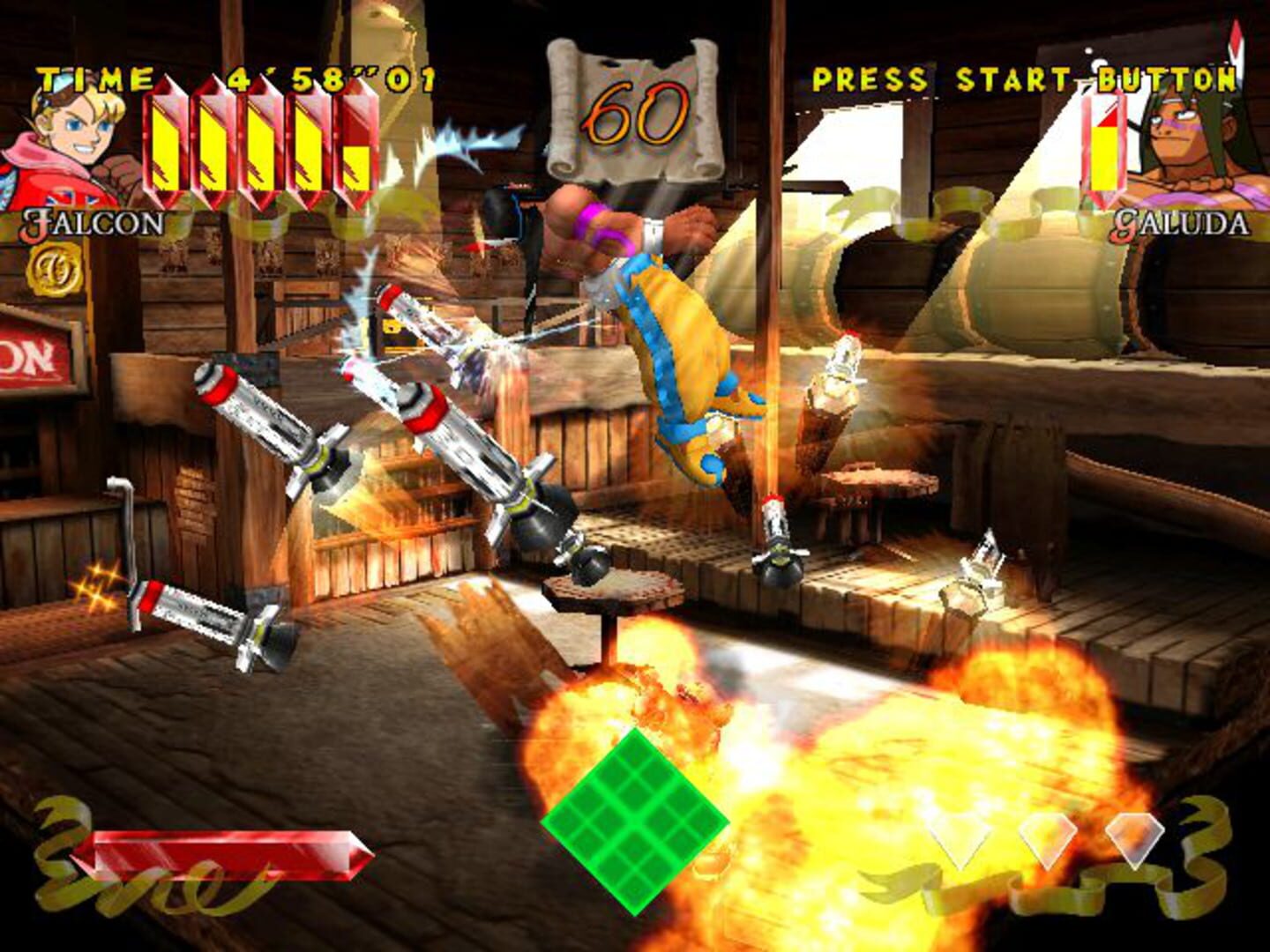
Visually, Power Stone remains a masterpiece of late-'90s aesthetic design. Capcom utilized vibrant, bright color palettes, anime-inspired character models, and lushly detailed dynamic environments. Stages feature multi-level structures, breakable columns, rolling barrels, and hazard-filled zones. Even by today's standards, the stylized visuals hold up remarkably well due to their strong artistic direction and smooth 60 FPS performance on original hardware.
Gameplay & Mechanics
The core gameplay revolves around arena combat where players collect three glowing Power Stones scattered across the battlefield. Obtaining all three stones triggers a high-powered transformation, granting characters devastating special attacks and temporary invulnerability. Additionally, stages are filled with usable objects, including chairs, tables, rocket launchers, swords, and flame throwers, ensuring that no two matches play out the same way.
Playable Platforms
Over the years, Power Stone has appeared on a limited number of platforms, making physical copies highly sought after by collectors:
| Platform | Release Year | Notes |
|---|---|---|
| Arcade (Sega NAOMI) | 1999 | Original Arcade Release |
| Sega Dreamcast | 1999 | Definitive Home Console Port |
| PlayStation Portable (PSP) | 2006 | Included in Power Stone Collection |
Final Recommendation
Power Stone (1999) is an absolute classic that stands the test of time. Its blend of simple controls, deep environmental strategy, and chaotic pick-up-and-play party action makes it one of Capcom's finest works of the era. Whether you are a fan of retro gaming, fighting games, or local multiplayer titles, Power Stone is an essential play.
Final Score: 9/10 — A timeless arcade brawler that remains just as fun today as it was in 1999. Highly recommended for Dreamcast fans and multiplayer enthusiasts alike.