


Monolith Soft's Ambitious Sci-Fi Odyssey
When Tetsuya Takahashi and the visionaries at Monolith Soft embarked on creating Xenosaga, they aimed to build one of the most intellectually ambitious narrative experiences in gaming history. Conceived after Takahashi's work on Xenogears at Square, the Xenosaga franchise was originally envisioned as a sprawling six-part epic exploring Gnosticism, Jungian psychology, Friedrich Nietzsche's philosophy, and deep cosmic hard sci-fi.
While business realities and shifting development goals condensed the grand six-part narrative down to a core trilogy along with a few expanded universe entries, the impact of Xenosaga on JRPG history remains undeniable. From iconic characters like the battle android KOS-MOS and protagonist Shion Uzuki to complex combat systems and cinematic storytelling, the series laid the foundation for Monolith Soft's eventual work on the Xenoblade Chronicles series.
In this article, we take a look back at the entire universe and rank every Xenosaga title from worst to best based on narrative impact, gameplay mechanics, pacing, and overall presentation.
Ranking All Xenosaga Games
5. Xenosaga Freaks
Released exclusively in Japan in 2004, Xenosaga Freaks is a lighthearted spin-off designed as fan service to tide players over between main entries. The title departs completely from traditional JRPG mechanics, splitting itself into three distinct components: a comedic visual novel text adventure, a puzzle game, and an encyclopedia of series lore.
The main attraction is Zenogumi, a comedic visual novel story featuring super-deformed chibified versions of the main cast. The storyline follows humorous misunderstandings and chaotic situations inside the Vector Industries laboratory. The second component is XenoPitten, a tile-matching puzzle game featuring character voices and special power-ups. Lastly, it included an extensive database of terminology, serving as an early lore companion for dedicated fans.
While charming for hardcore completionists, Xenosaga Freaks offers minimal gameplay depth and zero impact on the overarching sci-fi storyline, making it the least essential entry in the franchise.
4. Xenosaga Episode II: Jenseits von Gut und Böse
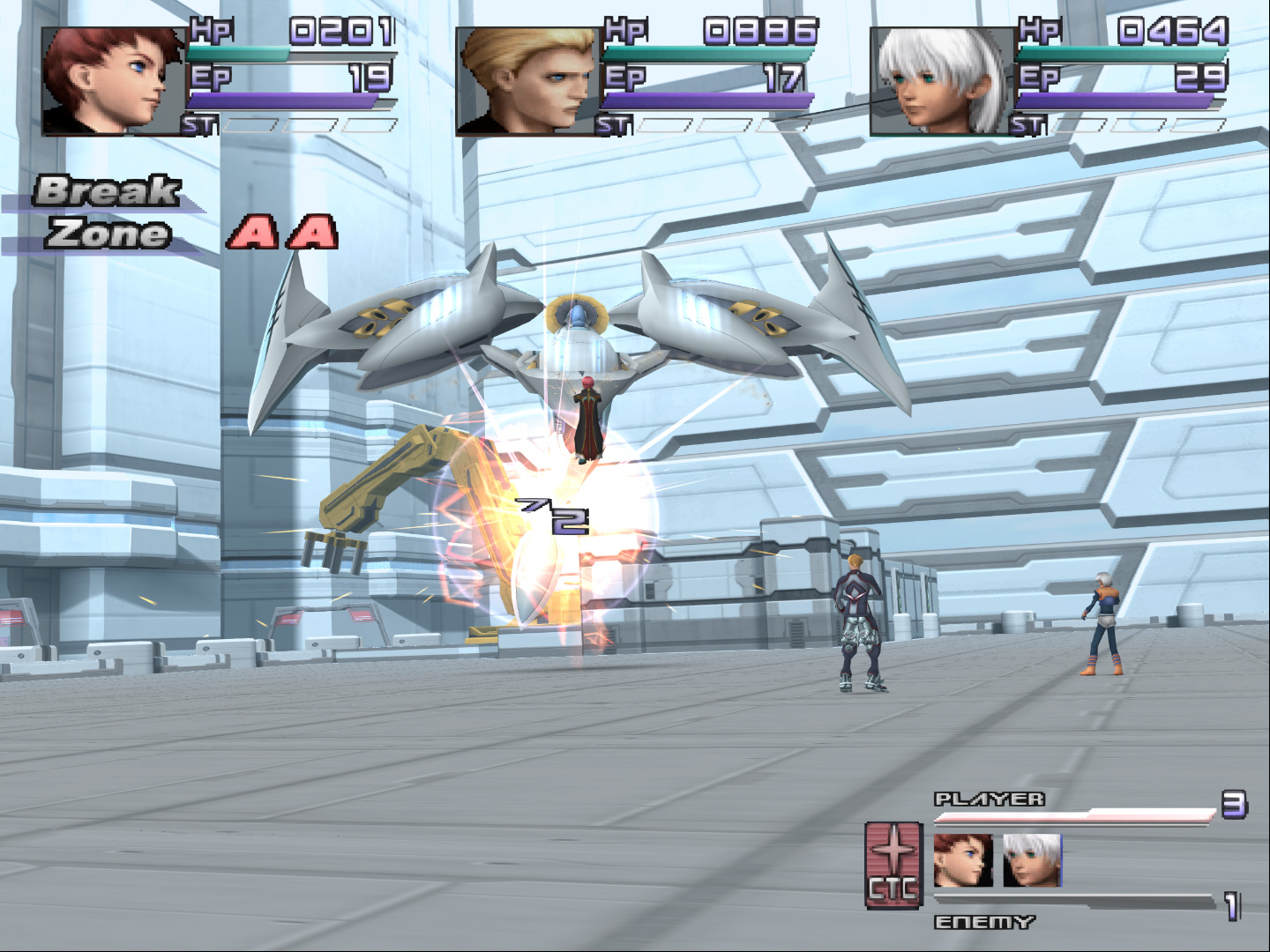
Released on PlayStation 2 in 2004, Xenosaga Episode II: Jenseits von Gut und Böse remains the most divisive chapter in the entire franchise. Following a change in key design staff, the developers attempted to overhaul almost every system from the first entry, resulting in mixed results that alienated a portion of the fanbase.
Visually, the game abandoned the anime-inspired character designs of the original in favor of more realistic proportions, which received polarizing reactions. Mechanically, traditional money, equipment shops, and victory gold were removed entirely in favor of a side-quest GS campaign system. The combat system shifted focus toward a complex break and combo mechanic alongside mech piloting (E.S. battles).
While normal combat encounters could feel tedious and overly long, Xenosaga Episode II: Jenseits von Gut und Böse shines in its storytelling. It provides essential character depth for Jr. (Rubedo) and Albedo Piazzolla, delivering some of the most emotional cutscenes and dramatic narrative climaxes in the entire series. Its soundtrack, composed jointly by Yuki Kajiura and Shinji Hosoe, offered incredible cinematic music, even if the transition felt jarring compared to the original game's orchestral score.

3. Xenosaga I & II
Released on the Nintendo DS in Japan in 2006, Xenosaga I & II is a complete portable reimagining of the first two PlayStation 2 titles. Developed in collaboration with Monolith Soft, this handheld remake combined the narrative arcs of both games into a single continuous experience, utilizing detailed 2D sprite art and classic top-down JRPG exploration.
What makes Xenosaga I & II so notable is how it addresses narrative and pacing issues found in the original releases. The script was revised by original writer Yuichiro Takeda to seamlessly blend the story threads. Crucially, cut material intended for Xenosaga Episode II: Jenseits von Gut und Böse—such as additional character background for Canaan and the backstory originally outlined in the mobile title Xenosaga: Pied Piper—was integrated directly into the DS storyline.
The turn-based battle system was streamlined for modern play, featuring grid positioning and touchscreen functionality. Though it never received an official localization outside of Japan, fan translation projects have allowed international fans to appreciate this as one of the definitive narrative ways to experience the early timeline of the series.
2. Xenosaga Episode I: Der Wille zur Macht
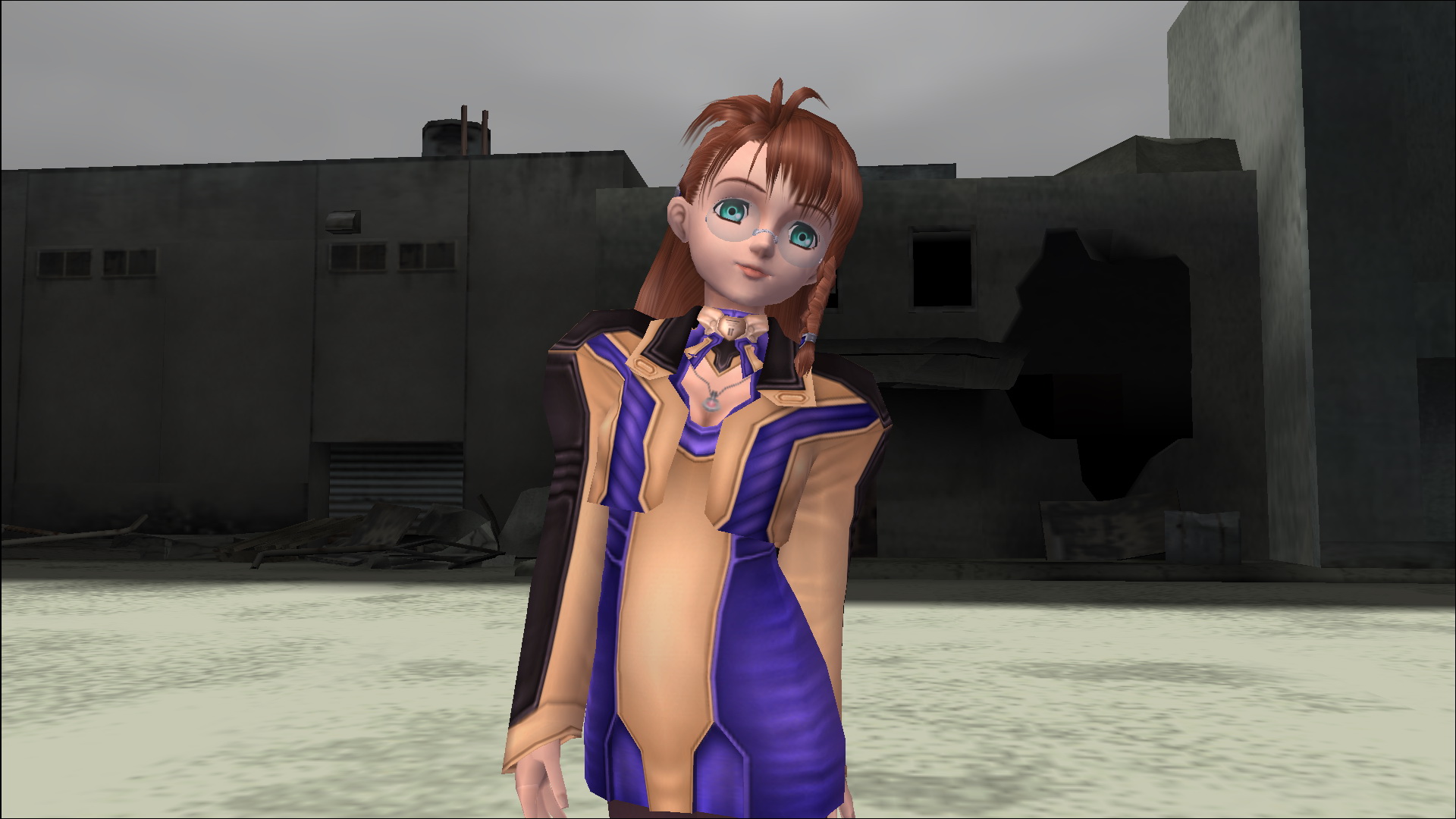
The game that started it all, Xenosaga Episode I: Der Wille zur Macht launched on PlayStation 2 in 2002 to critical acclaim. It set a new benchmark for cinematic storytelling in video games, featuring over three hours of movie-quality cutscenes and an intricate universe filled with philosophical intrigue, religious symbolism, and corporate conspiracy.
Players control Shion Uzuki, chief engineer of the Vector Industries First R&D Division, who helps deploy the anti-Gnosis android KOS-MOS. When their ship is attacked by alien entities known as Gnosis, a massive journey across space unfolds, pulling together a memorable cast including the cyborg Ziggy, the mysterious young girl MOMO, and the enigmatic Chaos.
The turn-based combat system introduced unique mechanics such as turn-order boosts, ether spells, and customizable tech attacks, paired with giant robot combat in A.G.W.S. units. While criticized by some contemporary reviews for its extremely lengthy cutscenes and slow pacing in dungeons, Xenosaga Episode I: Der Wille zur Macht established a brilliant sci-fi universe with unmatched narrative depth that still holds up remarkably well today.
1. Xenosaga Episode III: Also sprach Zarathustra
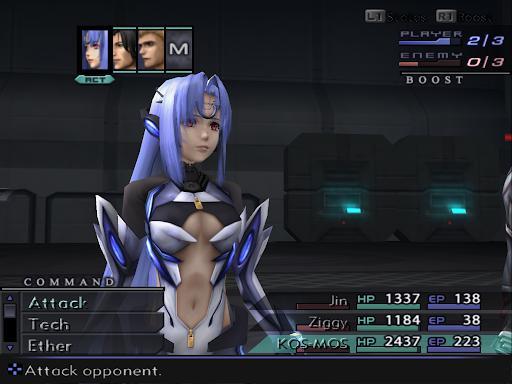
Standing at the peak of the franchise, Xenosaga Episode III: Also sprach Zarathustra represents the ultimate synthesis of story, gameplay, and presentation. Released on PlayStation 2 in 2006, this final chapter faced the daunting task of resolving dozens of major narrative cliffhangers, character arcs, and thematic mysteries—and delivered an extraordinary grand finale.
Listenening directly to player feedback, Monolith Soft returned to anime-style visual designs, refined the pacing, and designed a highly polished turn-based battle system. Battles introduced a refined Break gauge system, smooth character swapping, and exhilarating, fast-paced E.S. mech battles featuring customizable gear and powerful special moves.
Narratively, the game is an emotional roller coaster. From resolving the secrets behind KOS-MOS and T-elos to explaining the origin of the Gnosis, the Zohar, and the fate of humanity, Xenosaga Episode III: Also sprach Zarathustra delivers unforgettable cinematic climax after climax. Accompanied by an incredible musical score composed by Yuki Kajiura, it stands not only as the best game in the series, but as one of the finest JRPGs of the PlayStation 2 era.
Frequently Asked Questions
Do I need to play Xenogears before playing Xenosaga?
No, you do not need to play Xenogears to enjoy Xenosaga. While both series share thematic ideas, narrative concepts, and creative direction under director Tetsuya Takahashi, Xenosaga takes place in its own distinct intellectual property universe owned by Bandai Namco, while Xenogears is owned by Square Enix.
How is Xenosaga connected to Xenoblade Chronicles?
While the Xenoblade Chronicles series developed by Monolith Soft for Nintendo was originally spiritually connected, recent developments in Xenoblade Chronicles 3 and its expansion content have established canonical thematic bridges and crossover links between the universes, honoring KOS-MOS and the overall history of Monolith Soft's flagship franchises.
Why were there only three main Xenosaga games instead of six?
The original plan outlined by Tetsuya Takahashi involved a six-episode epic. However, lower-than-expected sales for Xenosaga Episode II: Jenseits von Gut und Böse and budget constraints forced Monolith Soft and publisher Namco to adjust scope, condensing the remaining story threads into the definitive climax seen in Xenosaga Episode III: Also sprach Zarathustra.
Final Thoughts
Despite production hurdles and structural shifts throughout its lifetime, the Xenosaga franchise remains a crowning achievement in gaming narrative design. Its willing embrace of complex philosophical themes, unmatched world-building, and enduring cast of characters have earned it a permanent place in JRPG history. Whether you are replaying the trilogy or discovering it for the first time, Monolith Soft's sci-fi epic stands as a timeless masterpiece.
