


Long before anime and video games flooded pop culture with stories set inside virtual realities, CyberConnect2 created a groundbreaking franchise centered around a fictional MMORPG named "The World." The .hack series combined real-time action RPG gameplay, fake desktop environments, forum message boards, and cross-media anime OVAs to deliver one of the most unique storytelling experiences in gaming history.
Spanning multiple PlayStation console generations, spin-offs, and remasters, the franchise holds a special place in the hearts of JRPG enthusiasts. In this article, we rank every major .hack video game entry from worst to best, taking into account narrative depth, gameplay mechanics, and lasting legacy.
Overview of the .hack Gaming Franchise
The core games are largely divided into two main eras: the original tetralogy (often referred to as IMOQ) starring Kite, and the second generation starring the infamous "Terror of Death," Haseo. Beyond these mainlines lie fighting spin-offs, portable crossovers, and experimental multiplayer titles. Here is how they stack up.
| Rank | Game Title | Platform | Release Year |
|---|---|---|---|
| 8 | .hack//VERSUS | PlayStation 3 | 2012 |
| 7 | .hack//Fragment | PlayStation 2 | 2005 |
| 6 | .hack//Link | PlayStation Portable | 2010 |
| 5 | .hack//Quarantine | PlayStation 2 | 2003 |
| 4 | .hack//Outbreak | PlayStation 2 | 2003 |
| 3 | .hack//Mutation | PlayStation 2 | 2003 |
| 2 | .hack//Infection | PlayStation 2 | 2002 |
| 1 | .hack//G.U. Last Recode | PS4, PC, Switch | 2017 |

8. .hack//VERSUS
Released exclusively in Japan as part of the .hack//The Movie Hybrid Disc bundle for PS3, .hack//VERSUS was CyberConnect2's attempt to turn the franchise into a 3D arena fighting game. While the visual polish was commendable—leveraging CyberConnect2's expertise from the Naruto: Ultimate Ninja Storm series—the combat mechanics were relatively thin and lacked long-term depth.
Featuring a modest roster of iconic characters like Kite, Haseo, and Sora, it serves as a fun piece of fan service for die-hard completionists, but fails to deliver the deep narrative and RPG progression that defined the rest of the series.

7. .hack//Fragment
Conceptually, .hack//Fragment is fascinating. It took the simulated online RPG mechanics of the single-player PS2 titles and actually turned them into a playable online multiplayer game. Players could create custom avatars, explore randomly generated root towns, and dive into dungeons with actual friends using the PS2 Network Adaptor.
Unfortunately, official servers closed relatively quickly, and the offline content was extremely sparse compared to full releases. While fan communities have preserved the title over time, as an official commercial release, it remains an experimental curiosity rather than a full-fledged entry.
6. .hack//Link
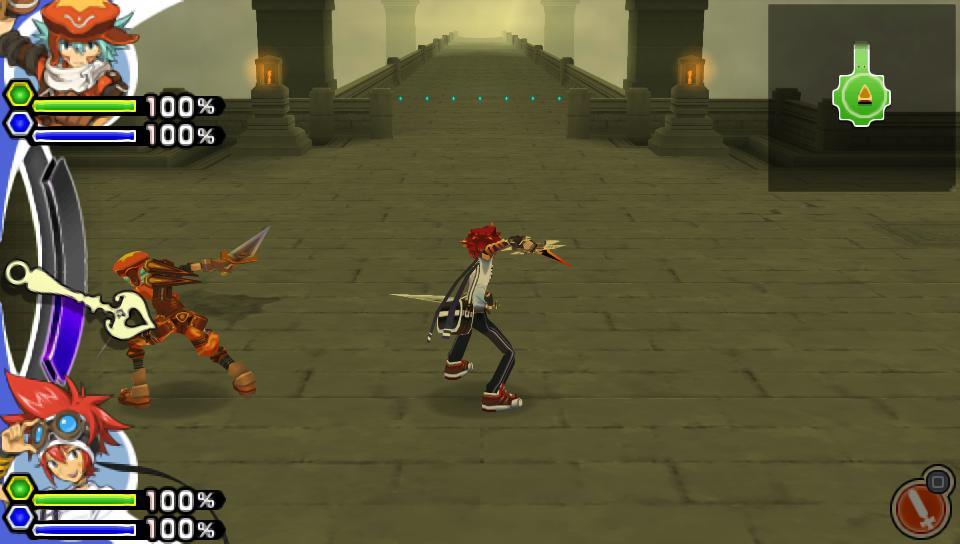
Released on the PlayStation Portable, .hack//Link was designed as a grand finale to the franchise's overarching story arc up to that point. Set in 2020, players control Tokio Kuga as he travels through virtual memory archives, interacting with over a hundred characters from past games, anime, and manga adaptations.
While the crossover fanservice is immense and the comic-book visual style is charming, the real-time action gameplay shifted toward a simplified timing-based combo system that turned repetitive far too quickly. Furthermore, the lack of an official Western release meant non-Japanese fans had to rely on fan translations to experience it.
5. .hack//Quarantine
As the fourth and final chapter of the original tetralogy, .hack//Quarantine delivered the climax to Kite's fight against the corrupted Data Bug epidemic threatening both "The World" and the real lives of Comatose players. Storywise, the stakes reached their highest point, resolving mysteries that spanned four games and several anime episodes.
However, from a gameplay perspective, .hack//Quarantine required an exhausting level of grinding. The infamous "Data Drain" requirement for unlocking story dungeons reached peak tediousness here. Today, it is best known for being one of the rarest and most expensive collector items on the PlayStation 2.
4. .hack//Outbreak
Part three of the original saga, .hack//Outbreak, raised the narrative tension significantly as system corruption began overflowing into the real world, causing widespread power outages and communication breakdowns. The story pacing picked up speed, introducing crucial lore surrounding the Epitaph of Twilight and key figures within CC Corp.
While it suffered from the same core repetitive dungeon design as its predecessors, the introduction of high-level party members, advanced virus core management, and richer forum threads kept players invested as the storyline sprinted toward its finale.
3. .hack//Mutation
The second installment in the original series, .hack//Mutation, expanded upon everything that made the first game great. Moving past the initial setup, Kite and BlackRose faced higher stakes as the mysterious figure Cubia made its dramatic appearance.
.hack//Mutation struck a fantastic balance between story progression and dungeon exploration. It introduced new system features, expanded the keyword-based Area Word generator, and offered a noticeable bump in tactical difficulty without feeling as punishingly grindy as later entries.
2. .hack//Infection
The one that started it all. Released in 2002, .hack//Infection introduced players to an unprecedented gaming format. Packaging a full console RPG alongside an exclusive anime OVA DVD (.hack//Liminality), it blurred the lines between transmedia storytelling.
Simulating a fictional desktop OS called ALTIMIT, complete with news articles, audio files, and message boards, .hack//Infection immersed players in the illusion of playing an actual MMORPG. Introducing iconic mechanics like Data Drain and Keyword Dungeon Generation, it remains an undisputed classic of the PS2 era.

1. .hack//G.U. Last Recode
Taking the top spot on our list is .hack//G.U. Last Recode, the comprehensive HD remaster collection containing all three original G.U. titles—.hack//G.U. vol. 1//Rebirth, .hack//G.U. vol. 2//Reminisce, and .hack//G.U. vol. 3//Redemption—plus an all-new fourth chapter (Vol. 4//Reconnection).
Following Haseo's vengeful quest to save his friend Shino from the mysterious PKer Tri-Edge, the G.U. series modernized combat with real-time weapon swapping, dynamic awakening attacks, and intense Avatar battles. .hack//G.U. Last Recode refines the experience with modern 60fps visuals, rebalanced pacing, quality-of-life upgrades, and a dedicated Cheat Mode for players who want to experience the stellar narrative stress-free. It stands as the definitive way to experience the best chapter in the franchise.
Frequently Asked Questions
Do I need to play the original tetralogy before playing .hack//G.U. Last Recode?
No. While playing .hack//Infection through .hack//Quarantine offers deeper context regarding returning characters and underlying lore, the story of .hack//G.U. Last Recode features a new protagonist and is written to be fully accessible to newcomers.
Is the original .hack tetralogy available on modern consoles?
Unfortunately, no. The original four PS2 games (.hack//Infection, .hack//Mutation, .hack//Outbreak, and .hack//Quarantine) have not received modern remasters or digital re-releases, making physical PS2 copies or emulation the only ways to play them today.
Final Thoughts
CyberConnect2's .hack franchise remains one of the most inventive RPG endeavors in video game history. By predicting virtual reality trends, online forum culture, and transmedia universe building decades in advance, these titles offered a gaming experience unlike any other. For modern players looking to jump into "The World," .hack//G.U. Last Recode is undeniably the best place to start.
