Introduction & Context
Released in February 2013, Dead Space 3 arrived at a pivotal moment for the survival horror genre. Developed by Visceral Games and published by Electronic Arts, the title marked a significant departure from the claustrophobic sci-fi terror of its predecessors, Dead Space (2008) and Dead Space 2 (2011). In an attempt to reach a broader audience, the development team integrated drop-in/drop-out co-op multiplayer, cover-based shooting mechanics against human enemies, and a complex weapon crafting system. While this shift generated debate among hardcore horror enthusiasts, Dead Space 3 remains an ambitious chapter in Isaac Clarke's saga.
Story and Narrative
The narrative picks up after the events of Dead Space 2, with protagonist Isaac Clarke hiding on a lunar colony. Broken and suffering from trauma, Isaac is recruited by EarthGov soldiers John Carver and Robert Norton to save Ellie Langford and put an end to the Necromorph threat once and for all. The investigation leads the team to Tau Volantis, a frozen alien world that hides the key to the Markers—the mysterious artifacts responsible for unleashing the Necromorph outbreaks.
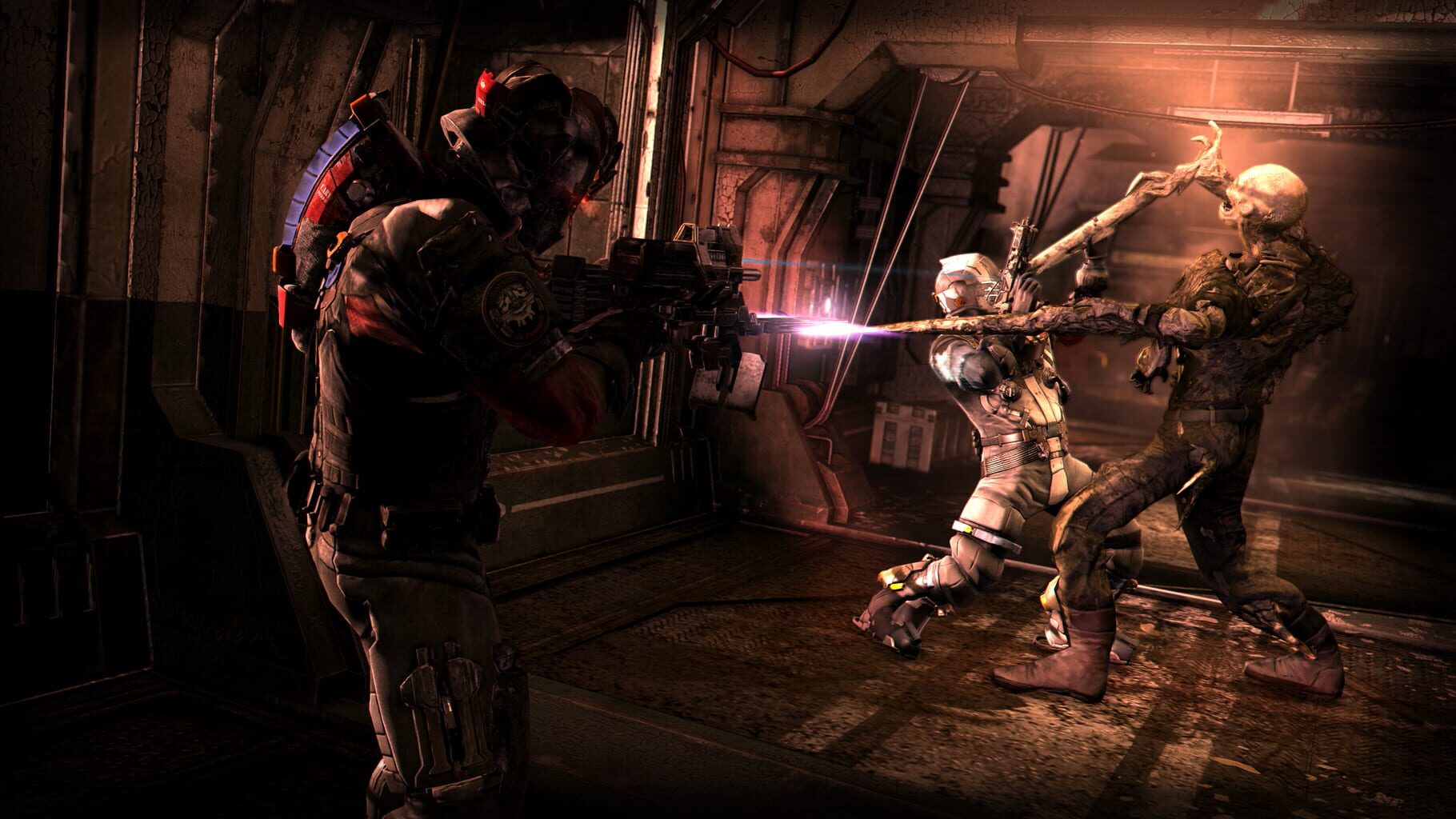
Dead Space 3 expands the series lore by delving deeper into the origins of the Markers, the fanaticism of the Church of Unitology led by antagonist Jacob Danik, and the terrifying concept of the Brethren Moons. While the main plot leaning heavily into action movie tropes strays from the isolated atmospheric fear of earlier entries, the narrative shines particularly brightly in co-op mode. Playing alongside Sergeant John Carver reveals unique psychological hallucinations exclusive to his character, adding layers of psychological tension and cooperative story building.
Graphics, Visual Design, and Audio
Visually, Dead Space 3 was a technical marvel for its era and continues to hold up remarkably well. The game transitions smoothly from the floating debris of orbital graveyards to the blinding blizzards and subterranean alien ruins of Tau Volantis. Visceral Games utilized dynamic lighting, intricate particle effects, and high-detail character models to bring the harsh environment to life.
The atmospheric sound design remains one of the franchise's greatest strengths. Metallic groans of decaying spaceships, howling arctic winds, and the terrifying shrieks of lurking Necromorphs create constant tension. The audio cues effectively communicate danger, keeping players on edge even during heavy combat sequences.
Developer and Publisher
Dead Space 3 was developed by Visceral Games (formerly EA Redwood Shores) and published by Electronic Arts. The game reflected corporate pressures of the early 2010s, incorporating microtransactions and an emphasis on action-oriented gameplay to maximize commercial appeal. Despite these publisher-driven inclusions, Visceral Games managed to deliver polished combat mechanics, a versatile weapon crafting engine, and memorable set pieces before the studio was ultimately closed by EA in 2017.
Playable Platforms
Dead Space 3 is accessible across multiple platforms today:
- PC: Available via Steam and the EA App, offering enhanced framerates and higher resolutions.
- PlayStation 3: Original physical and digital release.
- Xbox 360: Original physical disc release (spanned across two discs).
- Xbox One & Xbox Series X/S: Fully playable via Xbox Backward Compatibility with improved performance and stability.
Final Recommendation
Dead Space 3 may not provide the uninterrupted pure horror experience of the original game, but it excels as a high-octane sci-fi action horror adventure. Its deep weapon customization, stunning environmental design, and compelling co-op campaign make it a memorable entry in the trilogy.
Verdict: 4/5 — Highly recommended for sci-fi action fans and those looking for a fantastic cooperative horror-action experience with a friend.