


Introduction to the Jumping Flash! Series
When the original PlayStation launched in the mid-1990s, video game developers were attempting to figure out how to transition classic genres into fully 3D environments. While many focused on third-person action games, developer Exact and publisher Sony Computer Entertainment took a radical leap forward with Jumping Flash!. By combining a first-person perspective with extraordinary vertical movement, the series earned a legendary place in early 3D gaming history.
Featuring the mechanical robotic rabbit hero Robbit, colorful open stages, and memorable villains like Baron Aloha, the franchise established a devoted cult following. Below is the complete timeline of the Jumping Flash! series in chronological order of release and narrative progression.
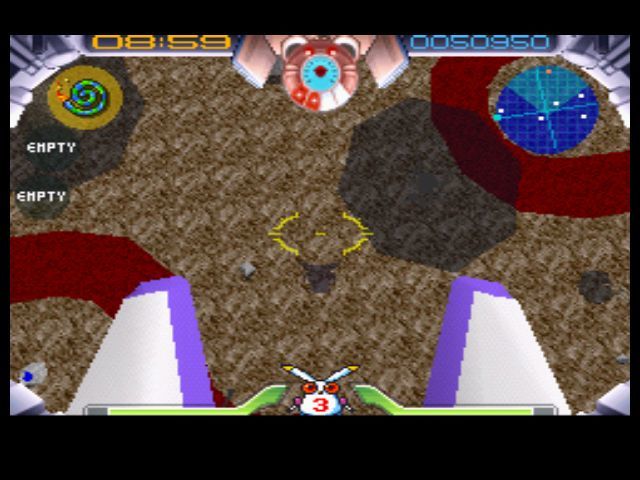
1. Jumping Flash! (1995)
The series debuted in 1995 with Jumping Flash!, holding a recognized legacy as one of the very first fully 3D platform games presented from a first-person view. The story introduces Robbit, a robotic rabbit dispatched by Universal Rescue. Robbit is sent to stop the mad astrophysicist Baron Aloha, who has physically carved up giant chunks of Crater Planet to construct his personal galactic resort space.
Equipped with a iconic triple-jump mechanic that lets players leap high into the clouds, Robbit must collect missing Jet Pods across fragmented floating stages. The original game laid down the core universe, camera mechanics, and lighthearted tone that defined the entire franchise.
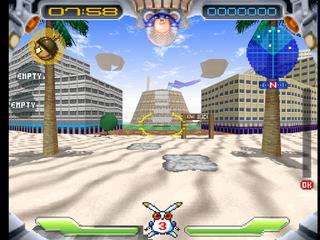
2. Jumping Flash! 2 (1996)
Following the successful debut of the original game, Jumping Flash! 2 released shortly after in 1996. Narratively, the game acts as a direct sequel. Baron Aloha finds his own planet, Little Muu, torn apart by an enormous alien organism known as Captain Kabuki. Left helpless, Baron Aloha turns to his former enemies at Universal Rescue for assistance.
Robbit returns as the main protagonist to rescue the captured MuuMuu creatures and recover the missing landmasses of Little Muu. Jumping Flash! 2 expanded on the original formula by introducing larger levels, expanded draw distances, fresh special weapons, and entertaining interactions with Baron Aloha's minion crew.
3. Pocket MuuMuu (1999)
Released in 1999 exclusively in Japan for the original PlayStation, Pocket MuuMuu shifted the franchise away from traditional platforming toward minigames and unique accessory hardware. The game was designed around Sony's PocketStation memory card peripheral.
The story focuses on the cute MuuMuu creatures living on MuuMuu Island. Players participate in various mini-challenges to help entertain and rebuild the island's resort facilities. While not a mainline platforming entry, Pocket MuuMuu expanded the overall world-building and lore surrounding Baron Aloha's loyal sidekicks.

4. Robbit Mon Dieu (1999)
Also arriving in 1999 as a Japan-exclusive release, Robbit Mon Dieu serves as the final main entry in the primary series timeline. Set after the events of Jumping Flash! 2, the narrative follows Robbit in his ongoing duties as Universal Rescue's primary tactical worker.
Robbit is dispatched to Planet Hanuma to resolve a variety of crisis requests submitted by its colorful citizens. Rather than focusing purely on collecting items across open floating maps, Robbit Mon Dieu shifted toward specific mission objectives, such as escorting non-player characters, repairing infrastructure, or defeating targeted bosses. It provided a delightful and humorous conclusion to the series timeline.
The Legacy of Jumping Flash!
Although the Jumping Flash! franchise concluded its main storyline during the original PlayStation era, its impact on 3D video game development remains significant. By proving that high-speed vertical motion and camera tracking could succeed in a first-person perspective, it served as a vital stepping stone for future first-person platforming games and movement-heavy action titles.
Frequently Asked Questions
How many games are in the Jumping Flash! series?
There are four games in total in the franchise: Jumping Flash!, Jumping Flash! 2, Pocket MuuMuu, and Robbit Mon Dieu.
Were all Jumping Flash! games released worldwide?
No. The first Jumping Flash! and its immediate sequel Jumping Flash! 2 were released globally. However, both Pocket MuuMuu and Robbit Mon Dieu remained exclusive to Japan.
Is Robbit Mon Dieu a direct sequel in the story timeline?
Yes, Robbit Mon Dieu continues the story after Jumping Flash! 2, featuring Robbit completing official Universal Rescue missions across new galactic territories.
