Introduction & Context
In 1988, arcade racing games were largely focused on reaching checkpoints against the clock, popularized by classics like Sega's Out Run. However, Japanese developer Taito shifted the paradigm by blending high-speed driving with action-movie police drama. The result was Chase H.Q. (Chase Headquarters), an iconic arcade title that delivered unprecedented thrills by giving players a direct, aggressive objective: hunt down criminals and ram their getaway vehicles off the road.
The Developer Behind the Classic
Chase H.Q. was developed and published by Taito Corporation, one of the most influential pioneers in the video game industry. Designed by Hiroyuki Sakou, the game leveraged Taito's custom arcade hardware to render fast pseudo-3D sprite scaling. Taito's innovative approach extended to sound design, utilizing digitized voice samples that brought an unprecedented cinematic atmosphere to the arcade floor in the late 1980s.
Story & Narrative
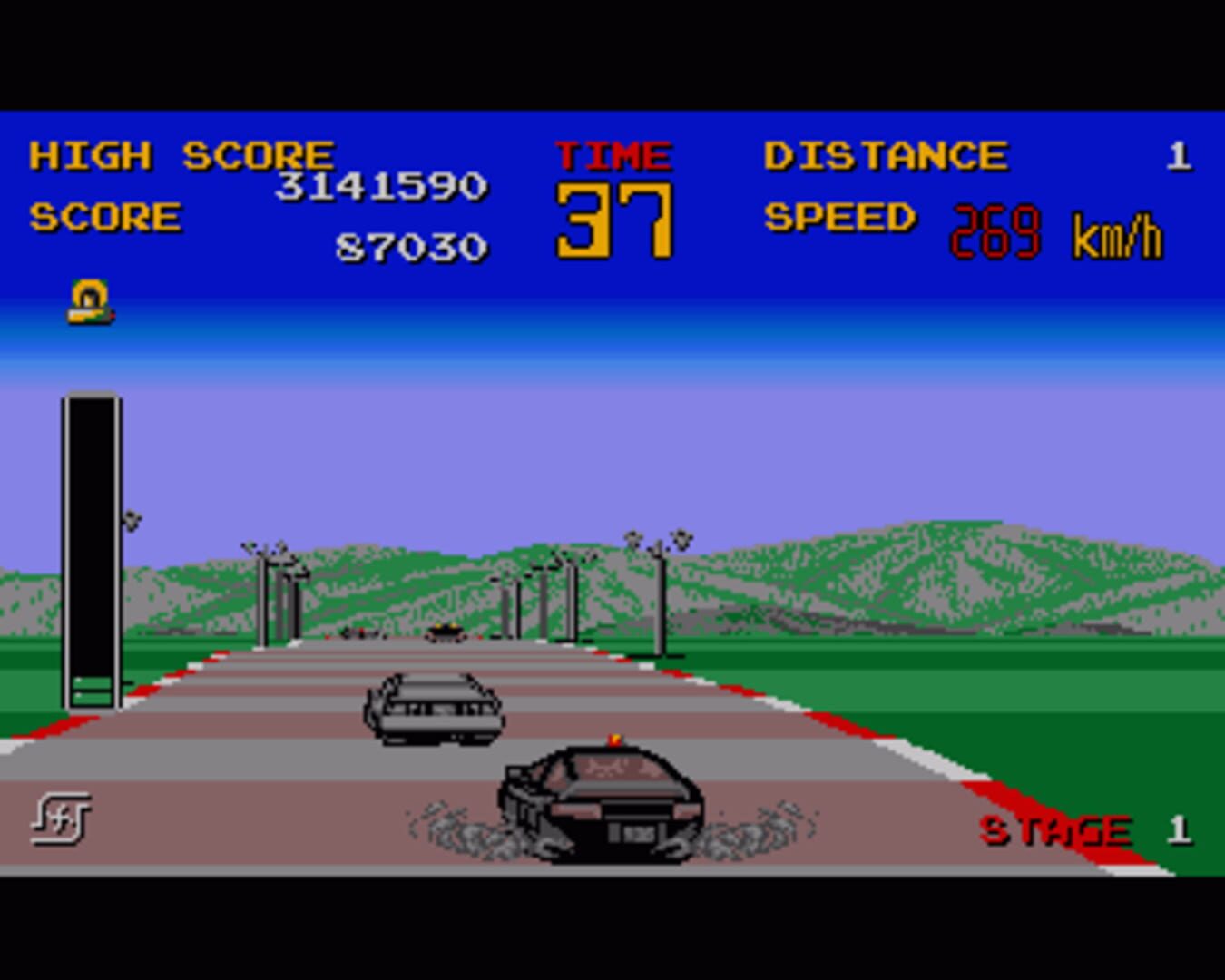
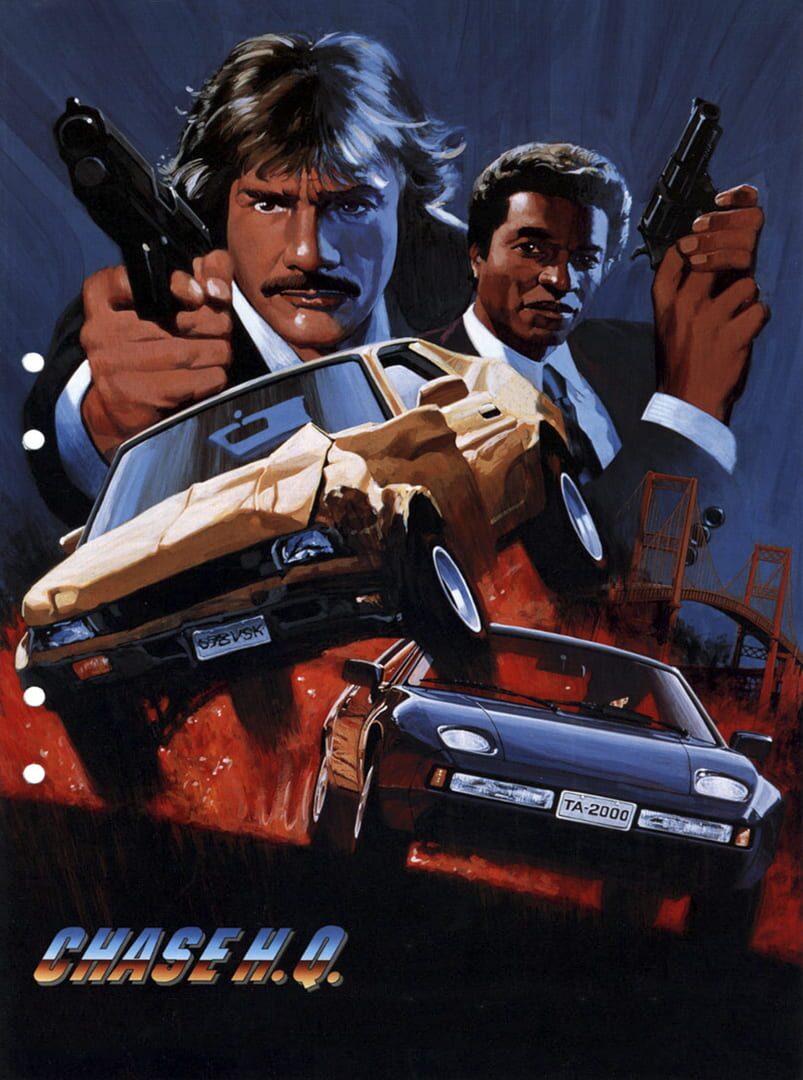
The narrative of Chase H.Q. draws heavy inspiration from 1980s buddy-cop shows like Miami Vice. Players assume the role of Officer Tony Gibson, accompanied by his partner Raymond Broggy, members of the Special Investigation Department. Driving a black, high-performance sports car resembling a Porsche 911 Turbo, the duo receives calls from dispatch operator Nancy setting up each mission.
The game consists of five distinct stages, each requiring the player to catch a specific wanted fugitive before the time limit expires:
- Stage 1: Ralph, the Los Angeles Killer (White Lotus Esprit)
- Stage 2: Carlos, the Armed Robber (Yellow Lamborghini Countach)
- Stage 3: Chicago Pushers (Grey Porsche 928)
- Stage 4: Kidnapper (Blue Nissan 300ZX)
- Stage 5: Valter, the Spy (Red his/her sports car)
The plot is simple yet effective, providing instant motivation for the high-speed pursuits.
Graphics & Sound Design
Visually, Chase H.Q. was a marvel for its era. Utilizing sprite-scaling graphics, the game creates a convincing sense of extreme speed, complete with twisting roads, elevation changes, and roadside obstacles. The sensation of switching on the turbo boost still feels satisfying decades later.
Audio is where the title truly shines. The digitized voice clips—such as "This is Nancy at Chase H.Q.!" and "Let's go, Mr. Driver!"—added immense personality. Coupled with an energetic synthesizer soundtrack and roaring engine sound effects, the game created an immersive adrenaline rush.
Playable Platforms
Following its massive arcade success, Chase H.Q. was ported to dozens of home systems, making it accessible across multiple generations of hardware:
| Platform Type | Systems Available |
|---|---|
| Arcade Original | Arcade Cabinet (1988) |
| 8-Bit Home Computers | ZX Spectrum, Commodore 64, Amstrad CPC, MSX |
| 16-Bit Home Computers | Commodore Amiga, Atari ST |
| 8-Bit Consoles | Nintendo Entertainment System (NES), Sega Master System, Game Boy, Game Gear |
| 16-Bit & PC Engine | TurboGrafx-16 / PC Engine, FM Towns |
| Modern Collections | PlayStation 2 (Taito Legends 2), Arcade Archives (PS4, Nintendo Switch) |
Final Recommendation & Verdict
Chase H.Q. (1988) remains a standout masterpiece in retro gaming history. By combining tight driving mechanics, timed thrill-chases, and dramatic vehicle combat, Taito created an unforgettable arcade experience that holds up remarkably well today. While the difficulty curve is steep—as expected from an 80s arcade game—the satisfaction of activating turbo boost and taking down a suspect never gets old.
Final Rating: 8.5 / 10 — A must-play classic for fans of retro racing, arcade history, and 80s action aesthetics. Available today on modern consoles via Hamster's Arcade Archives series.