


Introduction & Historical Context
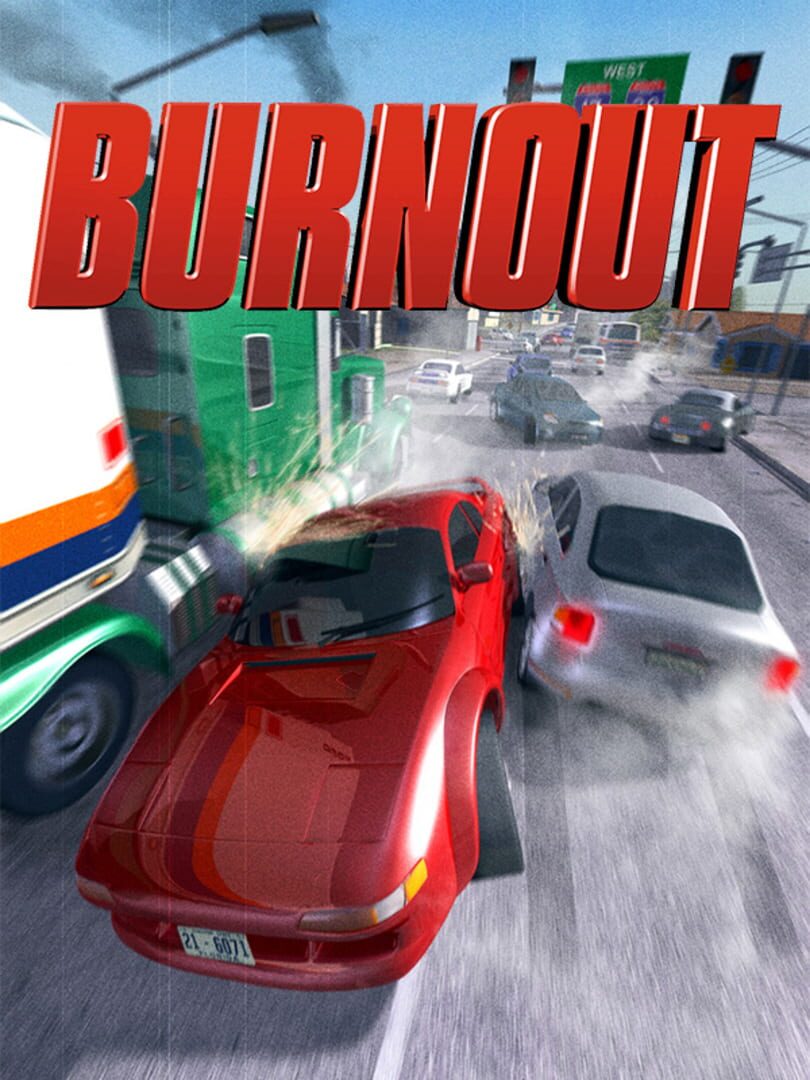
In late 2001, a quiet revolution occurred in the arcade racing genre. Burnout burst onto the scene, offering a visceral, pulse-pounding driving experience where reckless driving was not just a side effect—it was the core gameplay mechanic. During an era dominated by realistic simulators like Gran Turismo, Burnout stood out by prioritizing raw speed, extreme danger, and spectacular vehicle destruction.
Developer and Legacy
Burnout was developed by the legendary British studio Criterion Games and published by Acclaim Entertainment. Criterion utilized their powerful proprietary game engine, RenderWare, to create the title. This engine not only allowed Burnout to push hardware limits with blazing-fast frame rates, but it also became a foundational tool used by dozens of other game developers throughout the sixth console generation.
Story and Narrative
In true arcade fashion, Burnout completely eschews a traditional story or narrative mode. There are no rival drivers with cutscenes, backstories, or dramatic dialogue. Instead, the narrative is forged entirely by the player's moment-to-moment survival on the road.
Players select from a series of fictional automobiles—ranging from everyday sedans to high-performance muscle cars—and race across traffic-cluttered courses modeled after European and American locations. The overarching goal is simple: win races, unlock faster vehicles, and avoid catastrophic head-on collisions with civilian traffic.
Graphics, Sound, and Visual Presentation
For a title released in 2001, Burnout was a technical triumph. Running at a slick 60 frames per second on the PlayStation 2, it delivered an incredible sense of velocity that few contemporary games could match. The visual design captured the tension of high-speed street racing through clever motion effects, dynamic lighting, and detailed car damage models.
When crashes occur, the camera switches to dramatic slow-motion angles, highlighting flying glass, twisting metal, and crunching bodywork. The visual presentation is further amplified by realistic engine roars, screeching tires, and an energetic synth-rock soundtrack that perfectly complements the frantic gameplay.
Playable Platforms
The original Burnout game was made available on three major home consoles of its generation:
- PlayStation 2 (Initial Release: November 2001)
- Nintendo GameCube (Released: April 2002)
- Xbox (Released: April 2002)
Note: The original game is not currently available on modern digital storefronts or current-gen backward compatibility programs, meaning original physical media or emulation is required to play it today.
Gameplay Dynamics: Risk vs. Reward
The defining feature of Burnout is its Boost Bar. To fill the meter, players must engage in dangerously risky driving behaviors, such as:
- Driving on the wrong side of the road into oncoming traffic
- Drifting tightly around sharp corners
- Executing near-misses with civilian vehicles
- Getting airborne off hills and ramps
Once the meter is full, players can unleash a Burnout—a massive surge of speed that can be chained continuously if the player maintains risky driving tactics without crashing. This risk-versus-reward mechanic created an addictive gameplay loop that defined the entire franchise.
Final Verdict & Recommendation
While future entries like Burnout 3: Takedown and Burnout Paradise refined and expanded the concept with offensive takedowns and open-world mechanics, the original 2001 Burnout remains a pure, unadulterated classic. Its thrilling focus on speed, precision driving, and high-stakes traffic dodging laid the groundwork for one of the greatest racing series in video game history.
Recommendation: Highly recommended for retro racing enthusiasts, arcade fans, and gaming historians who want to experience where the iconic franchise began. If you enjoy pure, white-knuckle arcade speed, Burnout is well worth visiting.

