Introduction and Historical Context
Released in 1997 for the original Sony PlayStation, Armored Core marked a monumental shift in the mecha action genre. During an era when 3D console gaming was in its infancy, this game introduced players to a sophisticated simulator that prioritized deep customization, strategic resource management, and tactical combat over simple arcade action.
Developer Spotlight: FromSoftware
Long before achieving global acclaim with modern titles like Dark Souls, Bloodborne, and Elden Ring, Japanese developer FromSoftware was forging its identity through dark, challenging niche experiences. Following the success of their first-person RPG series King's Field, FromSoftware applied their signature high-difficulty philosophy to mecha combat with Armored Core, establishing a franchise that would span dozens of sequels and spin-offs over decades.
Story and Narrative: Corporate Warfare Underground
The narrative of Armored Core is set in a grim, post-apocalyptic future. Following a catastrophic global conflict known as the Great Destruction, the majority of humanity has been forced to live beneath the Earth's surface in vast subterranean cities. In this underground civilization, sovereign nations no longer exist; instead, supreme power is contested by ruthless megacorporations, primarily Chrome and Murakumo Millenium.
Players assume the role of a Raven—a mercenary pilot operating high-tech humanoid combat robots called Armored Cores. Narrated largely through cold corporate emails, contract briefs, and mid-mission radio chatter, the story places you as a tool of corporate espionage and proxy warfare. You take missions from competing factions, carefully balancing profit against repair and ammunition costs, with no true loyalty other than to the highest bidder.
Graphics, Sound, and Visual Design
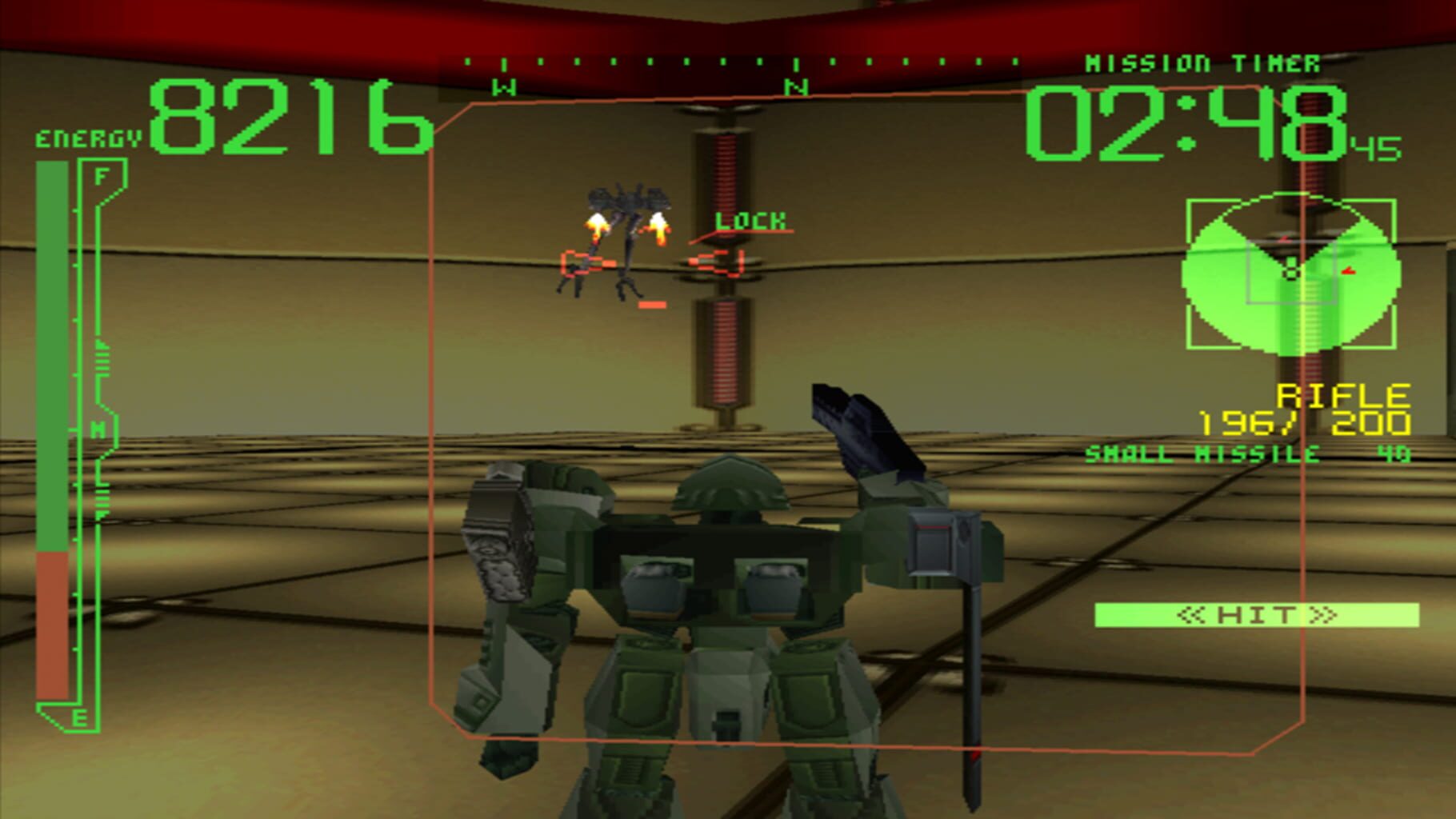
For a 1997 PlayStation 1 game, Armored Core was a technical marvel. It rendered complex fully 3D environments, industrial metallic textures, and fluid mech movements. While the environments can feel stark and sparse by modern standards, this minimalism complements the oppressive subterranean setting.
The visual design shines brightest in the garage assembly interface and mech modeling, allowing players to see their custom builds rendered accurately in action. The game's atmospheric electronic soundtrack, combined with heavy metallic sound effects and dynamic gunfire, creates an immersive industrial ambiance.
Where Is It Playable Today?
Tracking down ways to play the original 1997 release depends on your hardware preference:
- PlayStation 1 (PS1): Original physical disc playback on native hardware or early PS2/PS3 models with backward compatibility.
- PlayStation Network (PSN): Available as a downloadable PS One Classic for the PlayStation 3, PlayStation Portable (PSP), and PlayStation Vita (region availability may vary).
- Emulation: PC and mobile PlayStation 1 emulators offer enhanced resolution and custom button remapping options, which help modernize the original D-pad control scheme.
Final Verdict and Recommendation
Armored Core (1997) remains a foundational classic that holds up as a crucial piece of gaming history. While its default controls—predating dual-analog support—present a steep learning curve, the sheer depth of assembly options, rewarding combat, and atmospheric world-building make it a standout title.
"Armored Core (1997) laid the blueprint for complex mecha customization and proved early on that FromSoftware was a master of challenging, high-stakes game design."
Recommendation: Highly recommended for retro gaming enthusiasts, fans of FromSoftware's history, and mecha fans looking to experience where the iconic series began.