


The Xenosaga trilogy stands as one of the most ambitious and philosophically dense narrative achievements in modern gaming history. Created by Tetsuya Takahashi and the team at Monolith Soft, the story combines deep gnostic mythology, Nietzschean philosophy, Jungian psychology, and high-concept space opera. Because of its complex terminology, shifting timelines, and vast cast of characters, understanding the full scope of Xenosaga can be a daunting task for newcomers and long-time fans alike.
In this detailed guide, we explain the core lore concepts, break down the key events of all three main games, examine the pivotal characters, and clarify how the entire universe fits together.
Understanding the Foundation: Core Lore Concepts
Before diving into the chronological narrative, it is crucial to understand the foundational elements that drive the world of Xenosaga.
- The Original Zohar: A cosmic artifact discovered in 20XX Lake Turkana, Kenya. The Zohar acts as a infinite energy source and a gateway to the realm of U-DO, the collective consciousness and higher dimensional existence.
- U-DO: An unobservable, higher-dimensional entity. Human attempts to contact U-DO using technology like the Zohar frequently lead to cosmic catastrophic events, such as space-time anomalies and localized reality collapse.
- The Gnosis: Monstrous entities existing outside human space-time. Humans who make direct physical or mental contact with Gnosis suffer white factor transformation, turning into salt or becoming Gnosis themselves unless shielded by specialized technology.
- Realians: Synthetic humanoids created for labor, military combat, and administrative work. While treated as property by many, Realians possess distinct souls, emotions, and personal agency.
- Vector Industries: A sprawling megacorporation secretly orchestrating galactic events behind the guise of scientific development and military contracting.
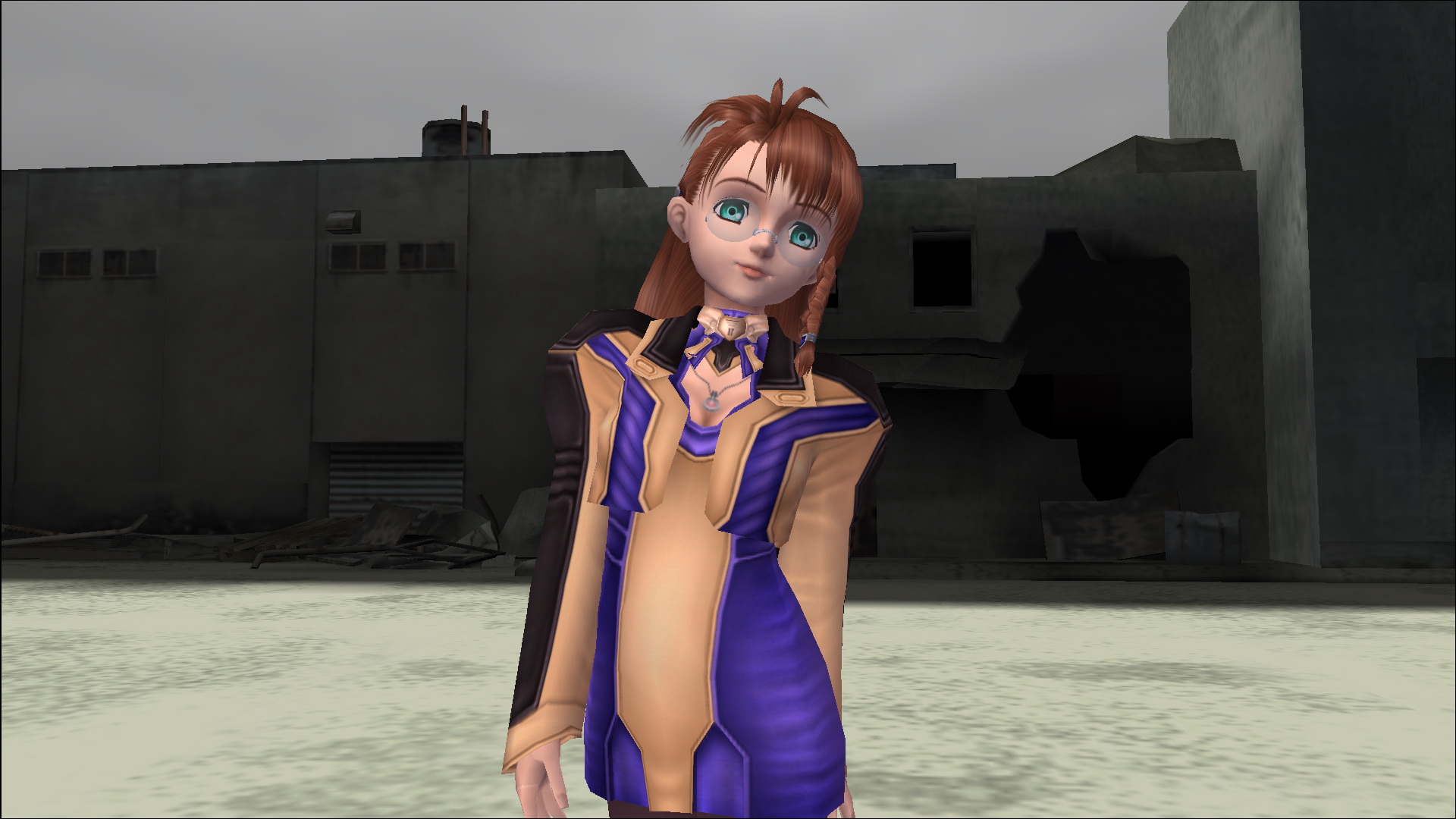
Xenosaga Episode I: Der Wille zur Macht - The Initial Awakening
The story begins thousands of years in the future on the Vector research vessel Woglinde. Chief engineer Shion Uzuki is conducting field tests on KOS-MOS, an advanced anti-Gnosis android prototype carrying the soul and essence of Mary Magdalene.
When the Woglinde retrieves a Original Zohar Emulator from space, a massive fleet of Gnosis attacks the ship. During the chaos, KOS-MOS automatically activates to protect Shion, destroying the enemy forces but leaving the vessel severely damaged. Shion and her battle-ready android escape alongside Cherenkov, a troubled military officer wrestling with internal psychological decay.
They are rescued by the passenger ship Elsa, commanded by Captain Matthews and joined by Chaos, a enigmatic young man holding mysterious powers capable of dispelling Gnosis without weaponry. Soon after, they cross paths with Jr. (RUBEDO), an artificially engineered URTV (U-DO Retrovirus) clone living on the Durandal colony ship, who is actively pursuing the rogue organization known as U-TIC.
The central conflict of Xenosaga Episode I: Der Wille zur Macht culminates at the planet Ariadne, where U-TIC attempts to tap into the Zohar's power, resulting in the entire planet vanishing from space-time. Shion and her allies discover that Albedo Piazzolla, a mentally unhinged URTV clone and brother to Jr., seeks to reach U-DO at all costs, regardless of the galactic destruction it causes.
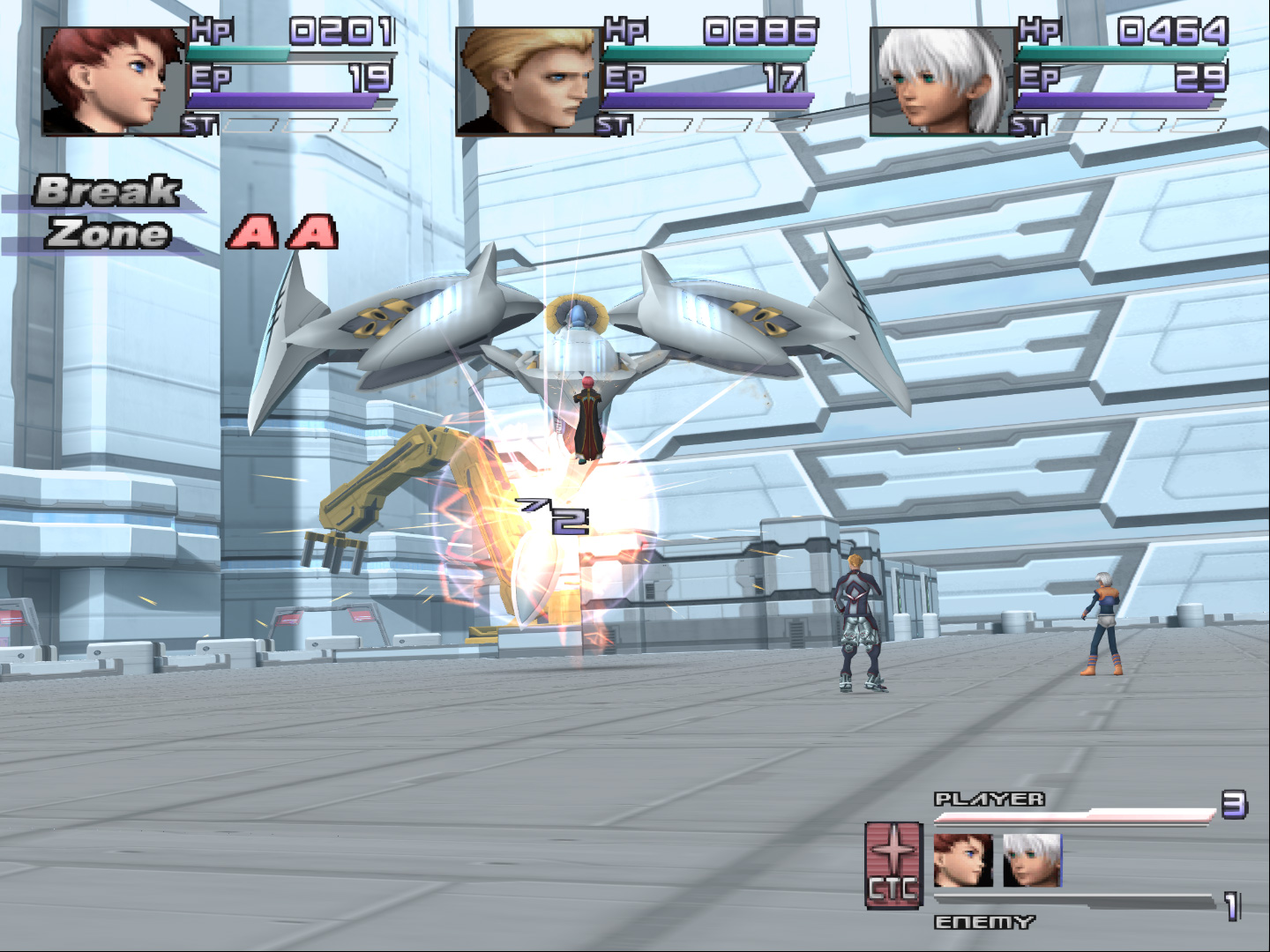
Xenosaga Episode II: Jenseits von Gut und Böse - Unveiling the Miltian Conflict
Picking up directly after the initial events, Xenosaga Episode II: Jenseits von Gut und Böse shifts focus heavily onto the past trauma of Jr. and his brother Jin Uzuki, as well as the tragic history of the Miltian Conflict fourteen years prior.
The group arrives on Second Miltia to secure the key to Old Miltia, the original home planet that was swallowed by space-time distortion. To unlock this pathway, they must enter the mind of MOMO, a high-spec Prototype Realian holding encoded data left behind by her creator, Joachim Mizrahi.
Key developments during this chapter include:
- The Secret of the URTVs: Jr., Albedo, and Nigredo were manufactured specifically to serve as weapons capable of neutralizing U-DO's destructive wavelengths. Albedo's mind became corrupted after making contact with U-DO's consciousness.
- The Fate of Old Miltia: The party successfully unseals Old Miltia, exposing the Original Zohar and unlocking the gigantic Omega System weapon.
- The Tragic Battle: Jr. is forced to confront Albedo in a fatal showdown. Albedo deliberately triggers his own death to force U-DO's full energy down upon the universe, forcing Chaos and KOS-MOS to intervene to preserve space-time.
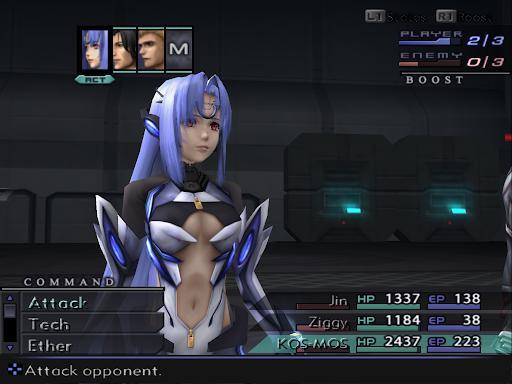
Xenosaga Episode III: Also sprach Zarathustra - The End of Eternal Recurrence
In the final chapter, Xenosaga Episode III: Also sprach Zarathustra, Shion Uzuki resigns from Vector Industries after discovering her employer's sinister motives. She joins the anti-Vector group Scientia to expose the truth behind the Gnosis infestation and the origin of mankind.
It is revealed that Wilhelm, the CEO of Vector Industries, is an immortal entity who has reset the universe countless times through a process called Eternal Recurrence. Every time humanity approaches total destruction due to the collective weight of human despair drawing Gnosis into reality, Wilhelm uses the Zarathustra system on planet Miltia to rewind time and restart human history from the beginning.
Shion discovers her own painful connection to this cycle: her grief over her mother's death during the Miltian conflict opened her mind to U-DO, unintentionally summoning the Gnosis into the physical universe in the current timeline.
The Grand Finale Explained
During the final battle at the heart of Zarathustra, Shion, KOS-MOS, Jr., and Chaos reject Wilhelm's endless loop of artificial safety. They choose instead to give humanity a true future, even if it carries the risk of total extinction.
Chaos reveals his true identity as Yeshua, the cosmic force of Animus, while KOS-MOS embodies Anima. Together, they gather the lingering souls of humanity and guide the Gnosis toward Lost Jerusalem (Earth). KOS-MOS sacrifices her body in space to protect the escaping crew, sending her remains drifting through the cosmos toward Earth, leaving Shion and her friends to rebuild galactic civilization naturally.
Key Character Breakdown
| Character | Role in Narrative | Key Reveal |
|---|---|---|
| Shion Uzuki | Chief Engineer & Main Protagonist | Her suppressed trauma and grief served as the catalyst for summoning the Gnosis. |
| KOS-MOS | Anti-Gnosis Battle Android | Contains the soul of Mary Magdalene and serves as the vessel for Anima. |
| Chaos (Yeshua) | Mysterious Companion | An immortal entity representing Animus, possessing the power to save or reset humanity. |
| Jr. (RUBEDO) | URTV Clone & Leader of Kukai Foundation | Engineered to suppress U-DO; carries unique genetic immunity to physical decay. |
| Wilhelm | CEO of Vector Industries | An eternal overseer driven to preserve existence via time resets using Zarathustra. |
How Does Xenosaga Relate to Other Xeno Games?
While legally distinct intellectual properties due to corporate ownership, Xenosaga shares thematic, structural, and narrative DNA with both Xenogears and the Xenoblade Chronicles series.
Originally envisioned by Tetsuya Takahashi as a six-episode epic, Xenosaga was designed to spiritually reflect the timeline leading up to the events seen in Xenogears. Furthermore, modern entries like Xenoblade Chronicles 2 and Xenoblade Chronicles 3 (specifically the Future Redeemed expansion) feature explicit appearances from KOS-MOS and direct references to the Zohar and Vector technology, strongly linking the multiverse together.
Frequently Asked Questions
Why did the Gnosis attack human space?
The Gnosis are spiritual manifestations driven toward humanity due to the collective rejection and isolation of individual human souls. They are drawn to the energy of the Zohar and individuals like Shion who possess strong subconscious connections to U-DO.
What was Wilhelm's primary goal?
Wilhelm wished to prevent the absolute destruction of space-time. By utilizing Zarathustra, he trapped consciousness in an infinite loop of time, ensuring humanity would continuously repeat history rather than collapse into oblivion.
Is KOS-MOS human?
While physically constructed as a mechanical android, KOS-MOS possesses a true soul (Mary Magdalene). Throughout the trilogy, her cold programming evolves into genuine emotional consciousness and self-sacrifice.
Final Thoughts
The narrative of Xenosaga remains one of gaming's most ambitious storytelling experiments. By blending complex existential philosophy with high-stakes sci-fi conflict, the trilogy created an unforgettable saga about choice, grief, and the resilience of the human spirit. Whether experienced through Xenosaga Episode I: Der Wille zur Macht or its climactic sequels, the journey of Shion and KOS-MOS stands as a masterpiece of video game lore.
