


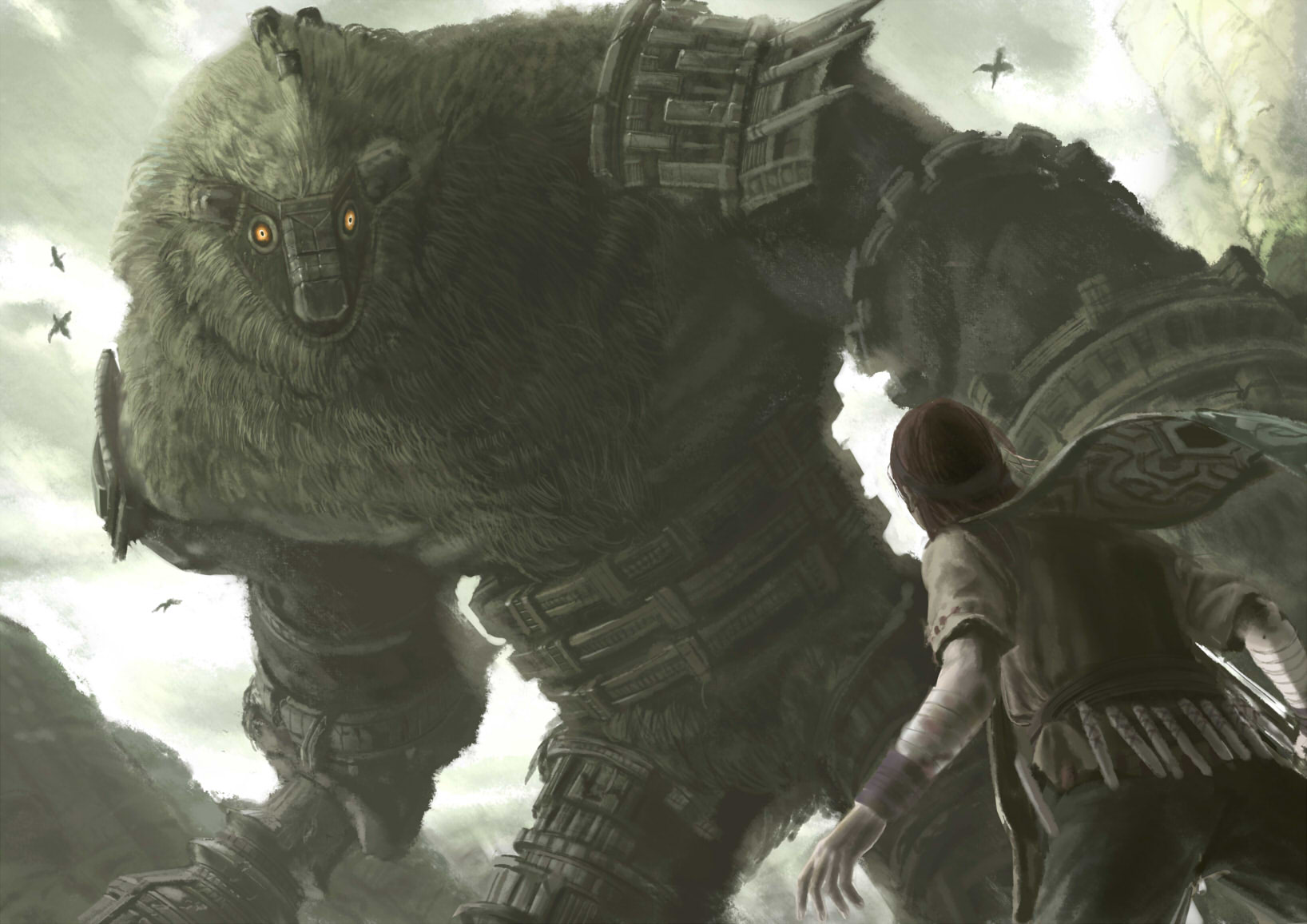
Understanding the Tragic Narrative of Shadow of the Colossus
Shadow of the Colossus stands as one of the most celebrated narrative achievements in modern gaming. Developed by Team Ico and directed by Fumito Ueda, the game tells an emotionally devastating story primarily through visual storytelling, subtle environmental cues, and minimalist dialogue. Beneath its majestic landscapes and awe-inspiring battles lies a haunting tale of desperate love, moral compromise, and ancient dark powers.
The Inciting Incident: Wander's Desperate Quest
The story begins with a young warrior named Wander, who travels across a vast, barren bridge on his faithful horse, Agro. Wander carries the lifeless body of Mono, a young maiden who was sacrificed in their homeland because of a cursed destiny. Refusing to accept her death, Wander steals an ancient relic known as the Ancient Sword and ventures into the isolated, forbidden realm known simply as the Forbidden Land.
The Pact with Dormin
Upon entering the massive Shrine of Worship, Wander reaches an altar where a mysterious, multi-voiced entity named Dormin speaks to him from above. Wander begs Dormin to restore Mono's soul. Dormin agrees to grant his request, but on one terrifying condition: Wander must destroy the sixteen massive Colossi scattered across the landscape.
Dormin warns Wander that the price for performing this task may be immense, stating that the outcome may be heavy to bear. Undeterred by the dark warning, Wander sets off with his sword and bow, willing to pay any cost to see Mono alive again.
The Tragic Journey: Slaying the Colossi
As Wander tracks down and slays each giant creature, a subtle yet unsettling transformation takes place. With each Colossus that falls, dark tendrils of energy burst from its body and pierce Wander, causing him to lose consciousness and wake up back at the Shrine of Worship.
Over time, Wander's physical appearance deteriorates dramatically:
- His skin grows pale and sickly.
- Dark veins spread across his face and body.
- Small, horn-like protrusions begin to sprout from his head.
- His clothes become ragged and stained with dark residue.
Through these visual changes, Shadow of the Colossus silently communicates that Wander is not performing a noble act of heroism, but rather undergoing a slow process of corruption. The Colossi themselves are largely peaceful guardians bound to the land, raising profound moral questions about Wander's actions.
The Climax: Lord Emon's Arrival and Dormin's Resurrection
While Wander slays the final Colossus, a group of armed shamans led by Lord Emon arrives at the Forbidden Land. Lord Emon, a priest from Wander's village, has pursued Wander to stop him from committing an unthinkable taboo.
Lord Emon reveals the truth: the sixteen Colossi were not evil monsters, but rather living seals created long ago to split and imprison the dark entity Dormin. By destroying the Colossi, Wander unwittingly shattered the seals and freed the entity's scattered soul.
When Wander returns to the shrine after defeating the final giant, he is fully corrupted and barely recognizable. Lord Emon orders his guards to shoot Wander. Although Wander is mortally wounded, Dormin takes control of his body, transforming him into a giant shadow monster that manifests the dark god's fully restored power.
The Ending Explained: Purification and Rebirth
In a final effort to seal the ancient evil once again, Lord Emon casts the Ancient Sword into a sacred pool at the back of the shrine. This triggers a powerful ritual that creates a swirling vortex of light, pulling Dormin and Wander's corrupted form into the deep waters to be sealed away forever.
With the seal restored, Lord Emon and his men flee the Forbidden Land as the great stone bridge collapses behind them, isolating the realm from the outside world once more.
Mono's Awakening and Agro's Loyalty
Back inside the shrine, Dormin's promise is kept: Mono awakens from her deathly slumber, fully restored to life. She is joined by Agro, who miraculously survived a fall off a collapsing cliff earlier in the story, though limping from injury.
Agro guides Mono to the sacred pool where Wander was dragged down. Instead of a monster, Mono finds a newborn infant in the water—a baby with tiny horns on its head. Mono takes the infant in her arms, and together with Agro, moves to a hidden, fertile garden at the top of the shrine, securing a quiet life isolated from the rest of humanity.
How Shadow of the Colossus Connects to Ico
The ending of Shadow of the Colossus directly ties into Fumito Ueda's earlier masterpiece, Ico. The horned infant found by Mono is widely accepted as the prequel origin of the cursed, horned lineage seen in Ico. The dark power lingering within Wander's reborn self laid the foundation for generations of boys born with horns, establishing Shadow of the Colossus as a distant prequel in the shared universe that also includes The Last Guardian.
Frequently Asked Questions
Is Wander evil in Shadow of the Colossus?
Wander is not inherently evil; rather, he is driven by selfless love and desperate grief. However, his willingness to ignore moral boundaries and slaughter innocent guardians makes him a tragic anti-hero whose actions bring about dangerous consequences.
Who or what is Dormin?
Dormin is an ancient, powerful dark deity whose spirit was divided into sixteen pieces and sealed inside the Colossi by high priests like Lord Emon. While Dormin possesses immense dark energy, the entity honors its promise to revive Mono at the end of the game.
Did Agro survive the fall?
Yes, Agro survives the fall near the end of the game. Though severely injured and limping, she makes her way back to the Shrine of Worship to be reunited with Mono.
Final Thoughts
The story of Shadow of the Colossus remains a timeless narrative masterpiece. By using minimal dialogue and relying heavily on atmospheric environmental storytelling, the game leaves players contemplating themes of sacrifice, love, grief, and the bitter consequences of defying nature. It is a haunting tale that continues to resonate with gamers years after its release.
