


Introduction & Context
Released in 2004, Michigan: Report from Hell is one of the most eccentric and lesser-known survival horror titles from the PlayStation 2 era. Despite its name referencing the U.S. state of Michigan, the story actually unfolds in Chicago, Illinois, which becomes enveloped by a mysterious, mutant-inducing fog that originates from Lake Michigan. Arriving during the golden age of Japanese horror gaming, this title distinguished itself not through traditional weapons and combat, but by placing players behind the lens of a news camera.
Developer and Origin
The game was developed by Grasshopper Manufacture, the renowned Japanese studio led by the visionary game designer Goichi Suda (Suda51), who served as executive producer and original concept creator. Directed by Akira Ueda and published by Spike in Japan and 505 Game Street in Europe, Michigan: Report from Hell bears the distinct surrealism, dark satire, and experimental game mechanics that Grasshopper Manufacture is famous for.
Story and Narrative Mechanics
In Michigan: Report from Hell, you play as Ted, a unseen cameraman working for the fictional news outlet ZTV. Alongside field reporters such as Zaida Serenity, your objective is to explore the fog-covered city, document supernatural occurrences, and expose the truth behind the monstrous outbreak.
What sets the narrative apart is its interactive morality system driven entirely by your filming behavior. As you record the chaos, your footage earns points across three distinct categories:
- Suspense: Awarded for capturing terrifying moments, monster attacks, and environmental hazards.
- Erotic: Earned by focusing the camera on provocative shots of the female reporters.
- Immoral: Earned by allowing non-playable characters or reporters to be harmed or killed while continuing to film without taking action.
The game features a permadeath mechanic for your reporting partners. If a reporter dies due to your inaction or bad decision-making, ZTV sends in a replacement, altering dialogue, scene dynamics, and branch paths toward multiple distinct endings.
Graphics, Sound, and Visual Presentation
Graphically, Michigan: Report from Hell showcases the aesthetic hallmarks of mid-budget PS2 titles. The environmental design utilizes dense fog—a classic survival horror technique—to create an oppressive atmosphere while masking technical hardware limitations. Creature designs are uniquely grotesque, ranging from leech-like parasites to fleshy, mutated humanoids.
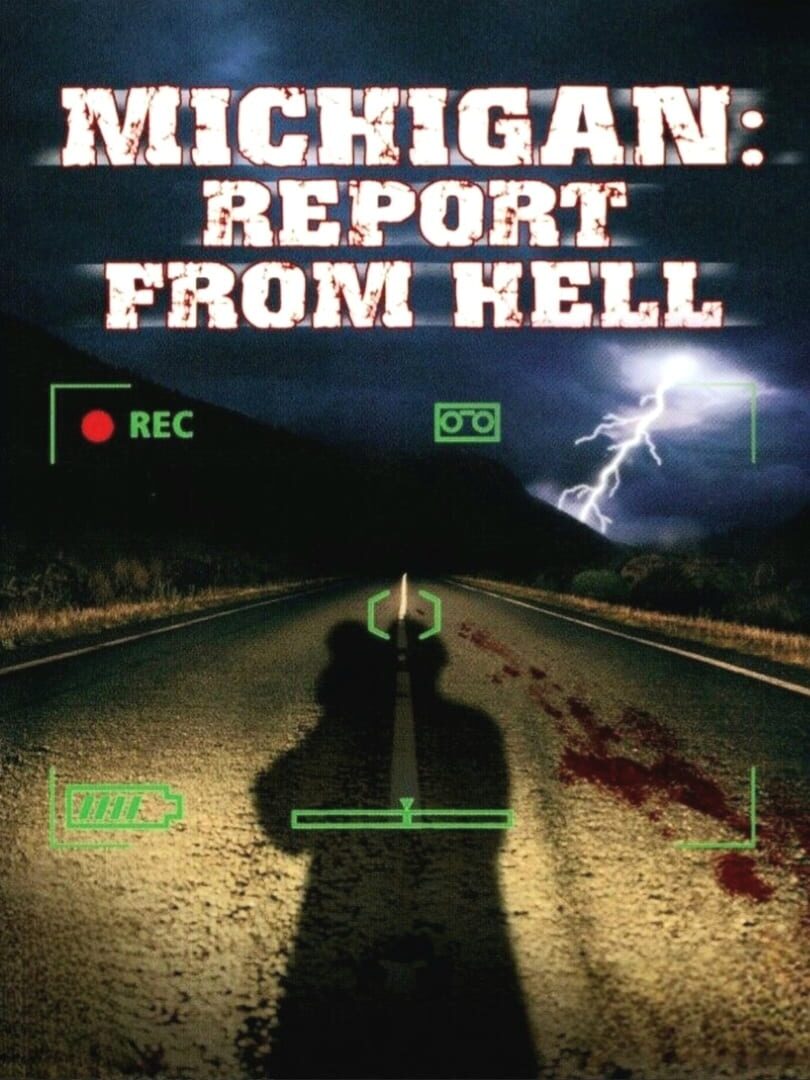
The audio presentation features intentionally campy, B-movie style English voice acting, which adds a layer of dark humor to the terrifying scenarios. The first-person viewfinder HUD complete with battery indicators, zoom levels, and record icons succeeds in delivering an authentic found-footage broadcast feel.
Playable Platforms
Availability for Michigan: Report from Hell remains limited due to its regional release history:
- PlayStation 2 (PS2): Officially released in Japan (2004) and Europe/PAL regions (2005).
- North America: The game was never officially released in North America, turning physical import copies into prized collector items.
Currently, playing the title requires an original PAL or NTSC-J PlayStation 2 console, regional modification hardware, or modern PC emulation through software like PCSX2.
Game Specification Summary
| Category | Details |
|---|---|
| Game Title | Michigan: Report from Hell |
| Developer | Grasshopper Manufacture |
| Original Release | August 5, 2004 (Japan) / September 30, 2005 (Europe) |
| Genre | Survival Horror / First-Person Adventure |
| Platforms | PlayStation 2 |
Final Verdict & Recommendation
Michigan: Report from Hell is a fascinating piece of survival horror history. While its controls can feel clunky and the scoring mechanics are undeniably bizarre, its novel found-footage approach and branching narrative paths offer a uniquely unsettling experience.
Recommendation: Highly recommended for Suda51 enthusiasts, retro survival horror collectors, and gamers seeking unconventional gameplay experiences. Casual players accustomed to modern action mechanics may find it frustrating, but horror archivists will appreciate its wild B-movie charm.

