Introduction and Context
Released during the rise of digital console distribution and portable handheld gaming, Exit (notably its 2007 Xbox Live Arcade port following its original PSP release) established itself as one of the most distinctive puzzle-platformers of the mid-2000s. Developed by Taito, the game challenges players to balance quick reflexes with precise strategic planning to rescue trapped civilians from life-threatening disasters.
Developer and History
Exit was developed by legendary Japanese developer Taito Corporation and published by Square Enix. While the title originally debuted on the PlayStation Portable in late 2005, its release on Xbox Live Arcade in 2007 brought the stylish escape artist to home console audiences worldwide. Taito applied their iconic arcade design philosophy to the game, creating levels that are easy to pick up but difficult to master.
Story and Narrative
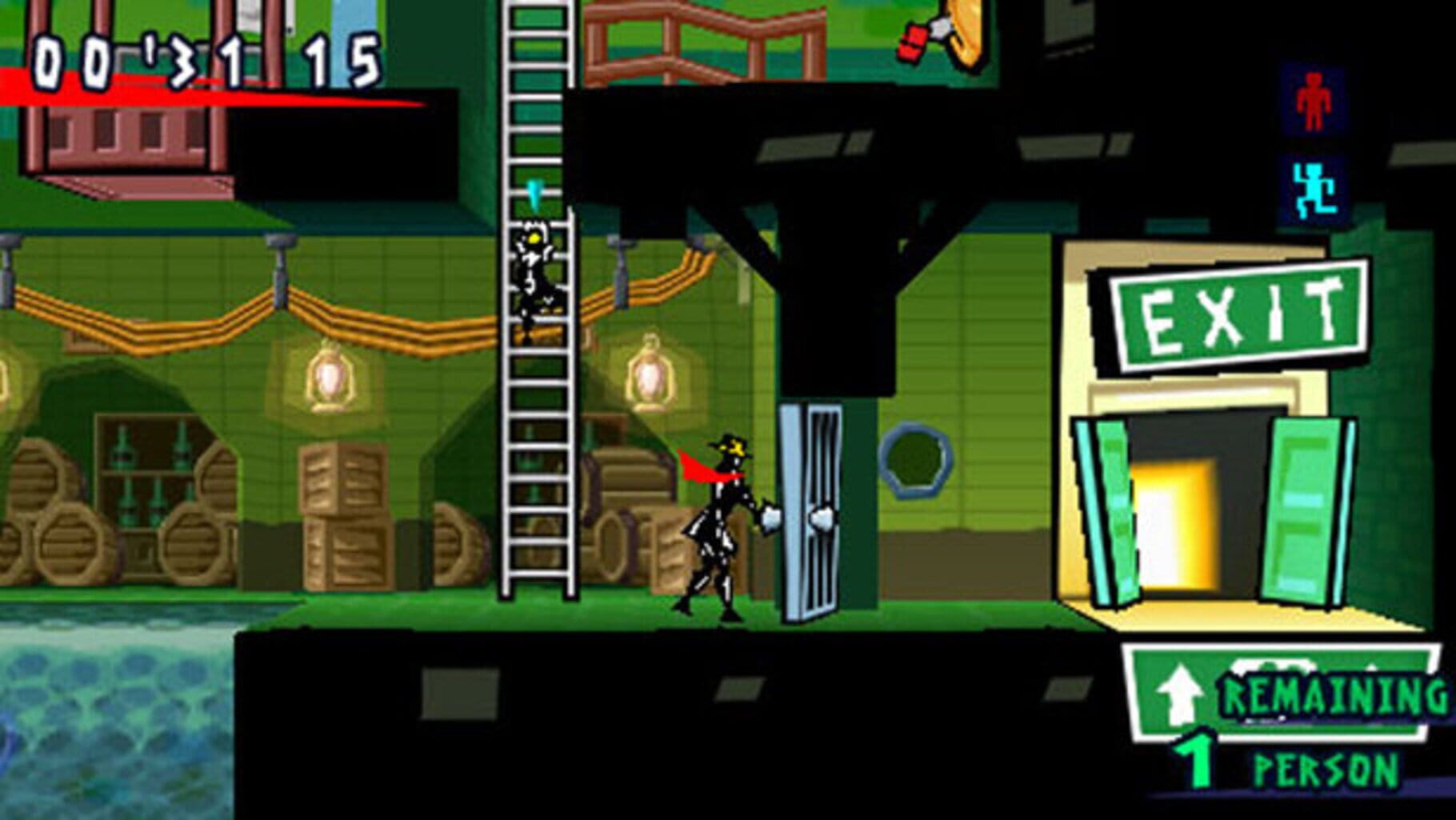
In Exit, players take control of Mr. ESC, a sleek, silhouette-styled professional escape artist. Mr. ESC earns his living by entering hazardous environments—such as burning skyscrapers, earthquake-damaged facilities, flooded complexes, and frozen laboratories—to evacuate trapped victims.
While the game keeps narrative depth light in favor of action, the disaster scenarios provide high environmental stakes. Every mission presents a timed survival puzzle where Mr. ESC must navigate dangerous terrain, assist victims with varying physical abilities, and guide everyone safely to the designated exit portal.
Gameplay and Mechanics
The gameplay blends classic platforming with team-management mechanics. Mr. ESC is agile, but he cannot complete every task alone. Success relies on coordinating with rescued companions, each bringing unique traits to the table:
- Young Adults: Standard companions who can jump and climb moderate obstacles.
- Children: Light and small, able to crawl through narrow passages but unable to climb high ledges without assistance.
- Adults (Heavy): Strong individuals who can move heavy obstacles but move slowly and require assistance climbing high walls.
- Injured Survivors: Vulnerable victims who must be carried directly by Mr. ESC or moved via stretchers.
Graphics and Visual Style
One of the standout features of Exit (2007) is its striking graphical identity. The game utilizes a high-contrast, pop-art comic aesthetic featuring bold vector silhouettes and sharp color accents. Mr. ESC's bright yellow tie and fedora make him instantly recognizable against dark, chaotic environments. Combined with remarkably fluid animation, the visuals give the game a smooth, graphic-novel feel that holds up exceptionally well today.
Playable Platforms
Over the years, Exit has been ported and adapted across various hardware platforms:
| Platform | Release Period | Details |
|---|---|---|
| PlayStation Portable (PSP) | 2005 – 2006 | Original handheld release with downloadable bonus levels. |
| Xbox 360 (Xbox Live Arcade) | 2007 | Enhanced HD console edition with refined controller layout. |
| Nintendo DS | 2008 | Adapted as Exit DS with dual-screen touch controls. |
Final Verdict and Recommendation
Exit (2007) remains a vibrant example of creative puzzle design from the mid-2000s. Its combination of tense rescue mechanics, memorable visual presentation, and clever level design offers an engrossing challenge for cerebral gamers.
With its high-contrast aesthetic and deep hazard-management gameplay, Exit stands out as a timeless puzzle-platforming gem.
Final Recommendation: Highly recommended for fans of strategic puzzle-platformers, arcade enthusiasts, and retro gamers looking for a unique title from Taito's modern catalog.