


When Sucker Punch Productions released Ghost of Tsushima in July 2020, expectations were high yet guarded. Arriving as one of the final major PlayStation 4 exclusives, it faced the monumental task of closing out a legendary console generation. What players received was not just another open-world action-adventure game, but a deeply cinematic, emotionally resonant masterpiece that instantly cemented its status as a modern classic.
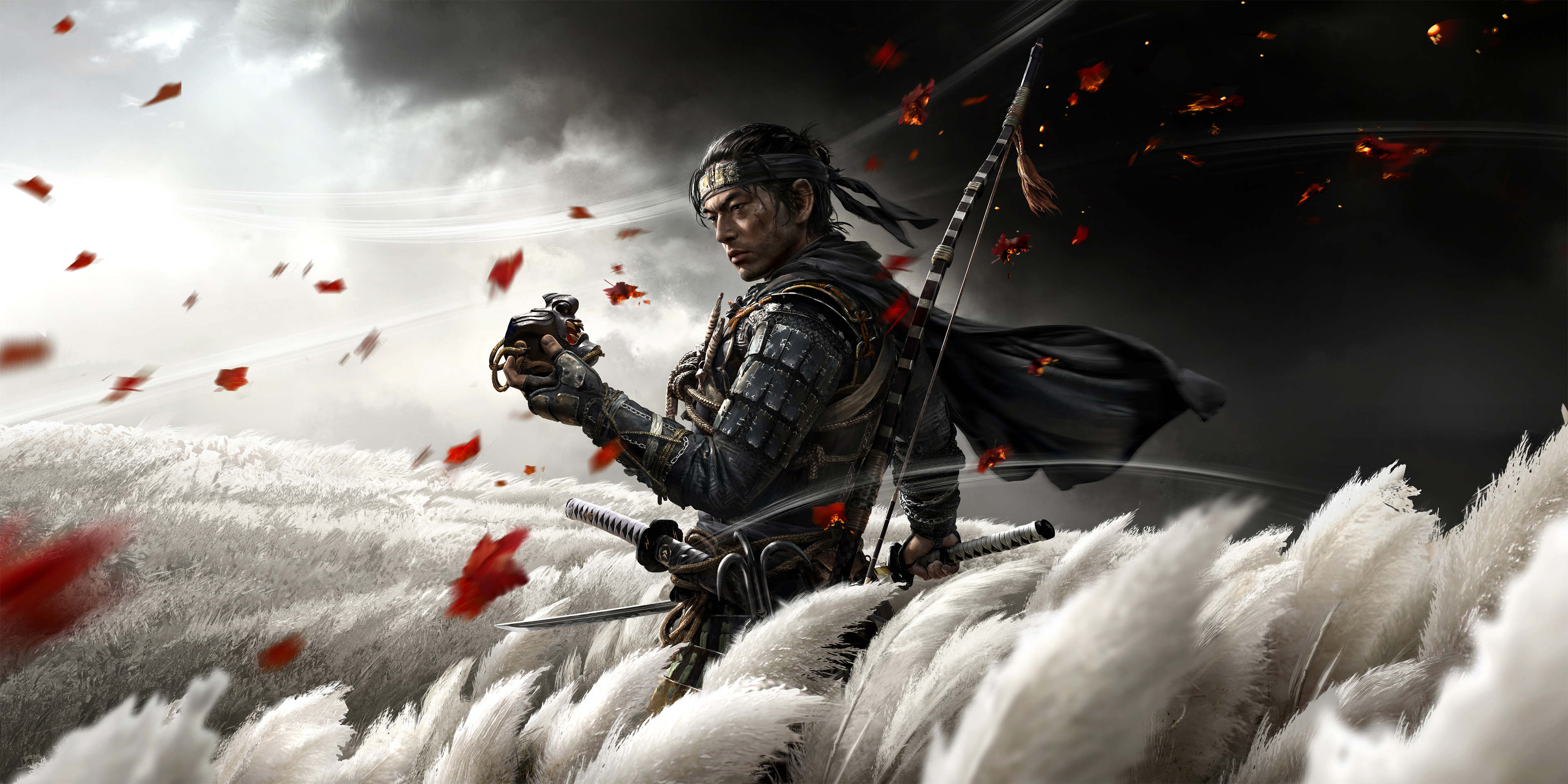
1. A Visual Triumph Rooted in Minimalist Exploration
One of the most striking aspects of Ghost of Tsushima is its breathtaking artistic direction. Instead of relying purely on hyper-realistic grit, Sucker Punch embraced a vibrant, romanticized aesthetic heavily inspired by classic Asian cinema. Golden forests sway violently in the ocean breeze, crimson leaves carpet battlefield floors, and vast fields of pampas grass stretch to the horizon in vivid detail.
More importantly, Ghost of Tsushima revolutionized open-world navigation through its brilliant Guiding Wind mechanic. By doing away with intrusive mini-maps, compass markers, and cluttered HUD elements, the game encourages players to engage directly with the environment. Wind gusts carry leaves across the screen to point toward objectives, while golden birds and foxes guide Jin Sakai toward hidden shrines, hot springs, and haiku spots. This seamless integration of user interface into nature created an immersive atmosphere rarely matched in open-world gaming.
2. Dynamic Combat That Balances Honor and Stealth
Combat in Ghost of Tsushima achieves a rare harmony between approachable action and intense, rewarding precision. Players can engage in tense, one-on-one Standoffs that replicate the classic samurai duels of Akira Kurosawa films, where timing and composure dictate whether a fight ends in a single brutal blow.
As the game progresses, players master four distinct sword stances—Stone, Water, Wind, and Moon—each tailored to break the defenses of specific enemy types. However, as the Mongol army escalates its cruelty, Jin is forced to adopt dishonorable tactics, deploying smoke bombs, poison darts, and assassination techniques as the feared Ghost. This mechanical progression directly echoes Jin's internal moral conflict, creating a seamless connection between gameplay and narrative.
3. The Emotional Journey of Jin Sakai
At the heart of the game's enduring legacy is the emotional story of Lord Jin Sakai. Raised under the strict code of Bushido by his uncle, Lord Shimura, Jin is taught that honor is everything—even in the face of absolute defeat. But when Tsushima Island is invaded by the ruthless Khotun Khan, Jin quickly realizes that rigid traditionalism will result in the total destruction of his people.
The tragedy of Jin's character lies in his willingness to sacrifice his own soul for the salvation of his home. By abandoning his moral upbringing to become the Ghost, he saves Tsushima but forfeits his noble standing, his family legacy, and his personal future. This poignant narrative weight elevates Ghost of Tsushima beyond a simple hero's tale into a profound character study on sacrifice and duty.
4. A Loving Homage to Samurai Cinema
Sucker Punch made no secret of their reverence for legendary filmmaker Akira Kurosawa. The developers even worked with Kurosawa's estate to create an official Kurosawa Mode—a black-and-white visual filter complete with film grain, audio processing, and high-wind effects designed to mimic 1950s Japanese cinema classics.
Paired with an authentic Japanese voice cast and a magnificent orchestral score by Ilan Eshkeri and Shigeru Umebayashi, Ghost of Tsushima delivered the ultimate samurai fantasy. Unlike historical titles such as Assassin's Creed or punishingly difficult games like Sekiro: Shadows Die Twice, it struck a delicate balance between approachable fun, poetic mood, and historical style.
5. Respecting Player Time in Open-World Design
Many modern open-world games suffer from bloated maps filled with repetitive, mundane chores. While Ghost of Tsushima utilizes familiar open-world structures, it carefully avoids player fatigue by respecting the player's time. Side quests, known as Tales of Tsushima, focus on deep character arcs for Jin's companions rather than generic fetch quests.
Activities throughout the island offer quiet moments of reflection between battles. Composing haiku allows players to pause and admire the landscape, bamboo strikes test physical rhythm, and honor shrines present brief platforming challenges. This rhythmic cadence between high-intensity swordplay and peaceful contemplation keeps the gameplay loop feeling fresh throughout the entire campaign.
6. Generous Post-Launch Support with Legends Mode
In an era often dominated by aggressive monetization, Sucker Punch surprised fans by releasing Ghost of Tsushima: Legends—a completely free cooperative multiplayer expansion. Introducing supernatural Japanese folklore, four distinct player classes, story missions, survival modes, and raids, Legends added dozens of hours of replay value and built tremendous goodwill across the gaming community.
Frequently Asked Questions
Is Ghost of Tsushima based on a true story?
The game is inspired by real history—specifically the first Mongol invasion of Tsushima Island in 1274. However, the story, main characters like Jin Sakai, and specific events are entirely fictionalized for dramatic purposes.
What is included in Ghost of Tsushima: Director's Cut?
The Director's Cut edition includes the full original game alongside the Iki Island story expansion, which introduces a brand-new storyline, unique enemy types, new armor, and mini-games. On PS5, it also features lip-syncing for Japanese audio, DualSense haptic feedback, and improved loading times.
Is Ghost of Tsushima too difficult for casual gamers?
No. Unlike soulslike titles, Ghost of Tsushima provides multiple customizable difficulty settings, ranging from an accessible Easy mode to the ultra-punishing Lethal difficulty. Gamers of all skill levels can comfortably enjoy the experience.
Final Thoughts: A Benchmark for Open-World Games
Ghost of Tsushima became an instant classic because it executed every aspect of modern game design with exquisite care and passion. By blending breathtaking artistic beauty, fluid combat, meaningful world design, and a deeply moving story, Sucker Punch delivered an unforgettable experience that stands as one of the finest games of its generation.
