


Introduction to the Doom Universe
Since its debut in 1993, the Doom franchise has defined the first-person shooter genre. While initially celebrated primarily for its fast-paced action and groundbreaking graphics, modern entries have expanded the franchise into a rich narrative universe centered around the unstoppable Doom Slayer. Understanding the overall timeline requires looking at both classic releases and modern re-imagining elements that connect the entire saga together.
The Chronological Timeline of Doom
Though the release dates span several decades, the narrative journey follows a distinct progression leading the Marine from a human soldier on Mars to an immortal god-like warrior waging eternal war against the forces of Hell.
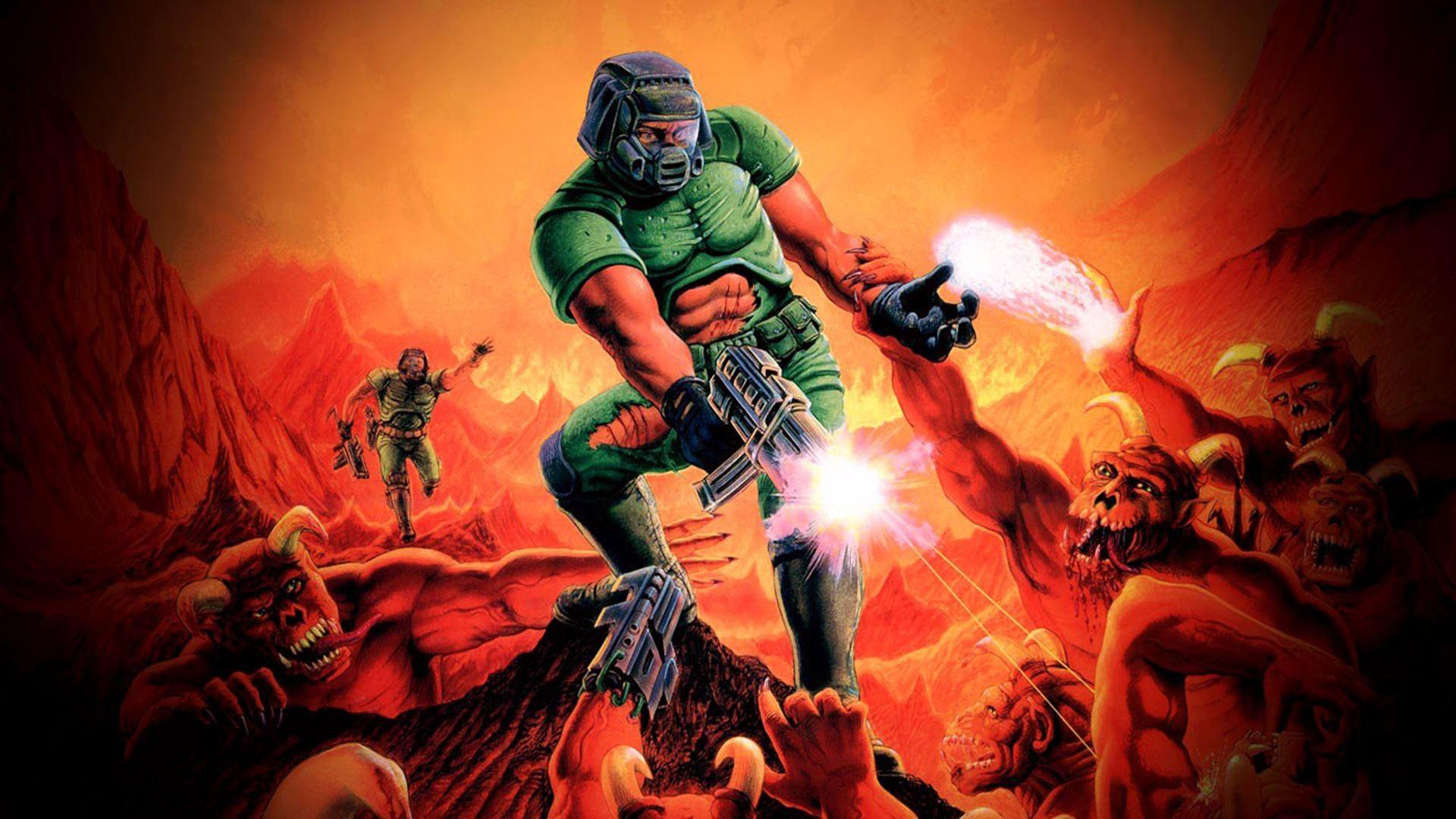
1. Doom (1993)
The story begins on Phobos, one of Mars' moons. The protagonist, an unnamed Space Marine often referred to as Doomguy, is stationed at a Union Aerospace Corporation (UAC) facility. When teleportation experiments open a gateway directly into Hell, demon hordes slaughter the personnel. The Marine fights his way through Phobos, Deimos, and eventually descends into Hell itself to stop the invasion.
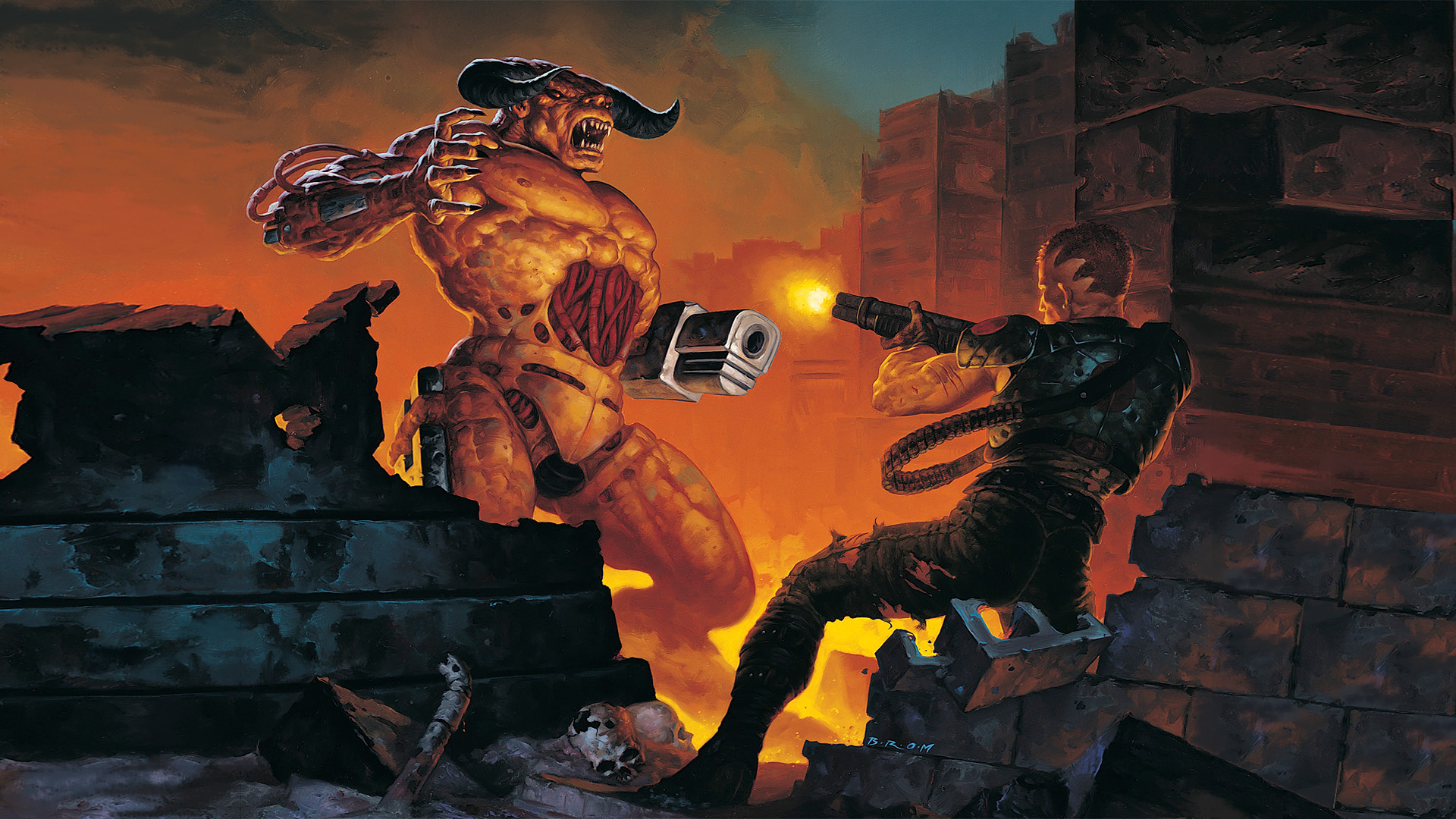
2. Doom II: Hell on Earth
Following his survival on Mars, the Marine returns to Earth only to discover that demonic forces have already invaded the planet. To save humanity, he helps evacuate survivors onto colossal starships. He then journeys into the heart of the demonic invasion to destroy the Icon of Sin, temporarily saving Earth from total destruction.
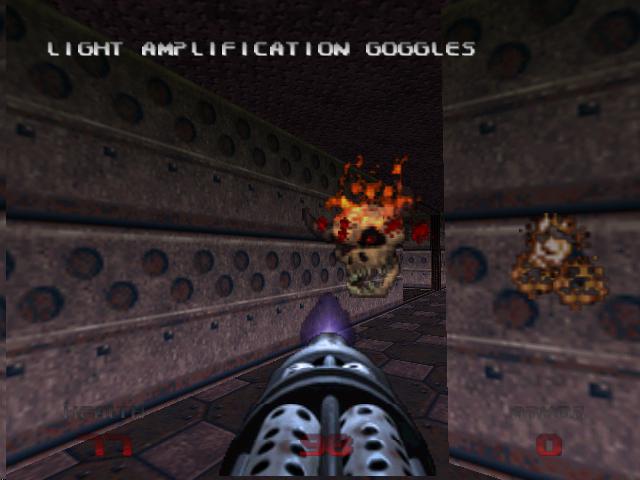
3. Doom 64
Often overlooked but crucial to the canonical storyline, Doom 64 picks up after the events of the second game. Planetary quarantine orders fail as a mysterious entity known as the Mother Demon resurrects defeated forces. The Marine returns to Mars to eliminate the remaining threat. Upon defeating the Mother Demon, he chooses to remain in Hell voluntarily to ensure demons can never invade realspace again.
The Transition: Sentinel Lore and Argent D'Nur
While trapped in Hell, the Marine fights endlessly until he is discovered by the Night Sentinels of Argent D'Nur. Impressed by his ferocity, the Sentinel King accepts him. Later, the Seraphim endows the Marine with superhuman strength and durability, transforming him into the legendary Doom Slayer. He is given the Praetor Suit forged by a renegade demon, becoming the ultimate weapon against Hell until he is trapped in a sarcophagus by demonic priests.

Side Branch: Doom 3
Released in 2004, Doom 3 serves as a narrative reboot that retells the original UAC Mars research facility disaster from a survival-horror perspective. While it operates in its own continuity separate from the primary Slayer storyline, it remains an essential piece of franchise history.
4. Doom (2016)
eons after his entrapment, UAC Chairman Dr. Samuel Hayden retrieves the Doom Slayer's sarcophagus from Hell during an expedition. When Dr. Olivia Pierce makes a pact with Hell, opening a portal on Mars, Hayden awakens the Slayer. The Slayer reclaims his Praetor Suit and systematically destroys the demonic infestation before killing the Spider Mastermind. At the conclusion, Hayden forcibly secures the Slayer and teleports him to an undisclosed location.
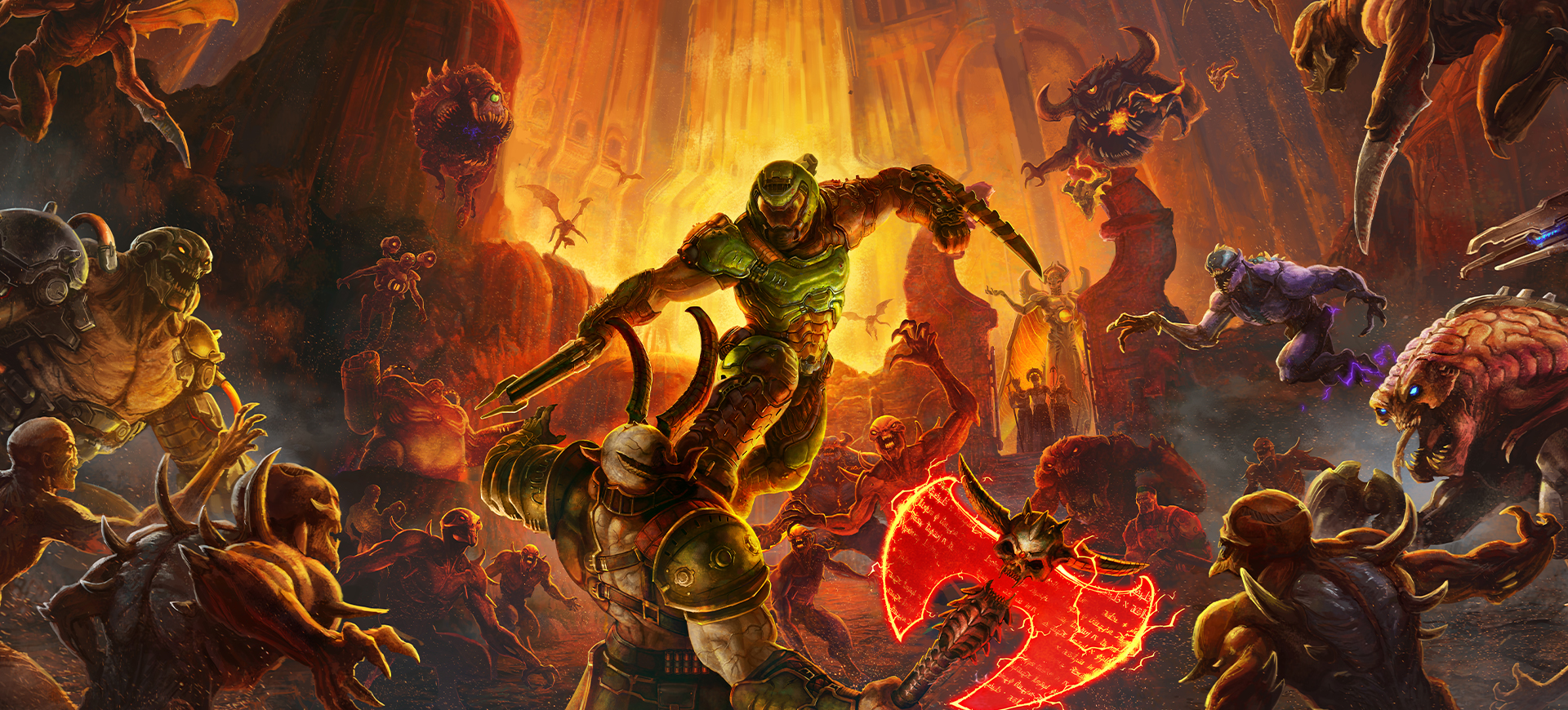
5. Doom Eternal
Set several years after the events on Mars, Earth has fallen to a massive demonic invasion orchestrated by the Maykrs and their Hell Priests. Operating from the Fortress of Doom, the Slayer returns to liberate Earth, execute the Hell Priests, defeat a resurrected Icon of Sin, and confront the corrupt ruler Khan Maykr. The saga culminates in the expansion chapters, where the Slayer confronts the Dark Lord of Hell—revealed to be the true creator of the multiverse—sealing Hell's invasion capabilities once and for all.
Frequently Asked Questions
Are all Doom games in the same timeline?
Yes, main entries including Doom (1993), Doom II, Doom 64, Doom (2016), and Doom Eternal form a single continuous timeline centered around the same protagonist. Doom 3 exists as a standalone reboot.
Is Doomguy the same person as the Doom Slayer?
Yes. Lore introduced in Doom Eternal confirms that the original Doomguy from the 1990s classics is the exact same individual who becomes the legendary Doom Slayer in the modern games.
Final Thoughts
The storyline of Doom has evolved from simple background lore into an expansive mythological saga. By following the chronology from the original Mars moon bases through the Sentinel realms to the confrontation with the Dark Lord, players can appreciate one of action gaming's most impressive lore transformations.
