Introduction & Context
Released in 2005 for the PlayStation 2, Enthusia Professional Racing was Konami's ambitious attempt to challenge Sony's dominant Gran Turismo 4. At a time when arcade-style racers and semi-simulators dominated the console landscape, Konami aimed strictly for authentic driving physics and mechanical accuracy. Although it suffered from commercial overshadowing by its rivals upon launch, Enthusia has earned a respected cult status among sim-racing enthusiasts over the decades.
Developer & The Revolutionary Physics Engine
Developed internally by Konami, Enthusia stood out primarily due to its innovative physics engine. The development team introduced the Visual Gravity System (VGS), an on-screen telemetry tool that displayed real-time G-forces, tire traction limits, and weight transfer. Unlike many racers of the era that relied on artificial rubber-banding or simplified grip algorithms, Enthusia calculated tire slip angles, suspension loading, and momentum with surprising fidelity. This made driving without assist systems a deeply rewarding experience for purists.
Game Modes & Narrative Structure
While Enthusia Professional Racing does not feature a traditional cinematic narrative, it offers structured single-player modes that create a sense of progression:
- Enthu Life: The main career mode where players start at lower driver rankings and compete in randomly generated race calendars. Winning races awards skill points, upgrades driver level, and unlocks new vehicles through a unique roulette-style post-race reward system.
- Driving Revolution: A challenge-based mode reminiscent of license tests, forcing players to maintain precise speeds, braking points, and lines through gated courses.
- Free Race & Time Attack: Standard modes offering full customization over tracks, weather conditions, and car setups.
Graphics, Sound, and Technical Performance
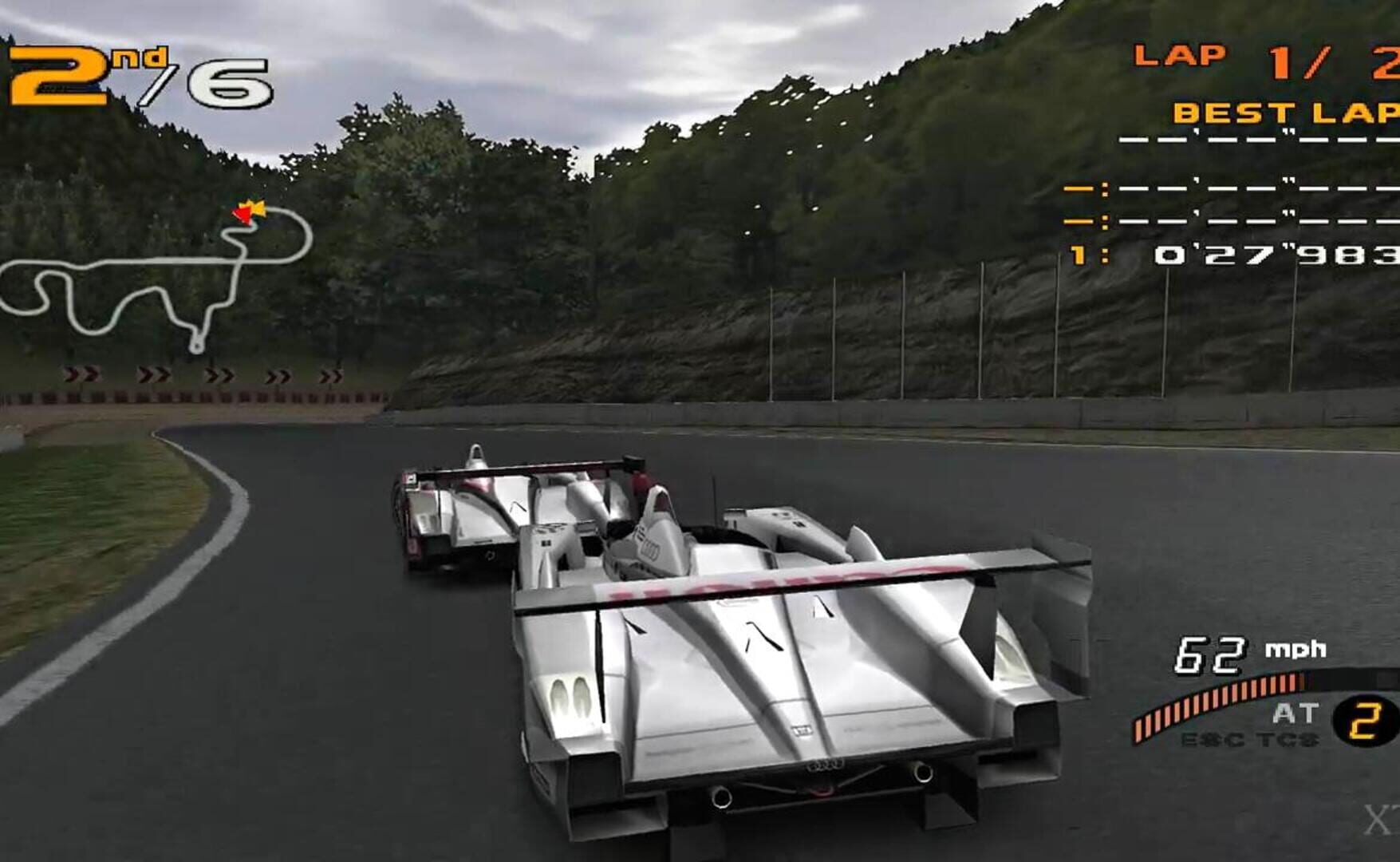
Graphically, Enthusia pushes the PS2 hardware to its limits. Vehicle models are intricately detailed inside and out, featuring accurate reflections, dynamic lighting, and detailed brake calipers. The environments range from realistic circuit layouts like Tsukuba Circuit and Nürburgring Nordschleife to picturesque fictional mountain passes. While the frame rate remains remarkably smooth at 60 FPS during races, the sound design is a mixed bag—engine notes are decent for 2005 hardware, though some cars sound somewhat synth-heavy compared to real-life counter-parts.
Playable Platforms & How to Play Today
Officially, Enthusia Professional Racing was released exclusively as a PlayStation 2 title. Today, physical copies can be found on secondary markets for reasonable prices. Modern gamers and sim enthusiasts can also experience the game at upscaled resolutions via the PCSX2 emulator on PC, which offers excellent compatibility, improved texture filtering, and full support for modern force-feedback racing wheels.
Final Verdict & Recommendation
Enthusia Professional Racing remains one of the most underrated driving simulators of the sixth-generation console era. While its career mode progression can feel somewhat grindy and RNG-dependent, the core driving feel rivaled—and in some physics aspects, surpassed—its contemporaries. If you appreciate realistic vehicle dynamics, classic 2000s Japanese car culture, and forgotten retro simulators, Enthusia is a must-play.
Final Rating: 8.5/10 — A technical triumph that every sim racing fan should experience at least once.